Sponsored

Charger Comparison Needed

blackghost

Member
Joined
Aug 5, 2023
Threads
2
Messages
5
Reaction score
4
Location
949
Vehicles
2023 Taycan 4S
Country flag
Hi, I am looking into purchasing a home charger but having trouble deciding on:

1. Hardwired vs. Plug In
2. ClipperCreek HCS-60 EV Charger vs. ChargePoint EV Charger

Read through the different posts on this forum but hard to get a real read on what is the best way to go.

I've heard hardwired gives you better power efficiency but 14-50 plug in gives you flexibility to change the charger if you need.

Aren't both chargers I'm looking at charging at 48 A? So is it worth paying almost double for the ClipperCreek charger?

Thank you for your insights!
Sponsored
 

SergeyIndy

Well-Known Member
First Name
Sergey
Joined
Dec 19, 2021
Threads
41
Messages
2,445
Reaction score
1,831
Location
Indianapolis
Vehicles
24 Macan GTS, 23 Taycan Turbo, 20 Cayenne Turbo
Country flag
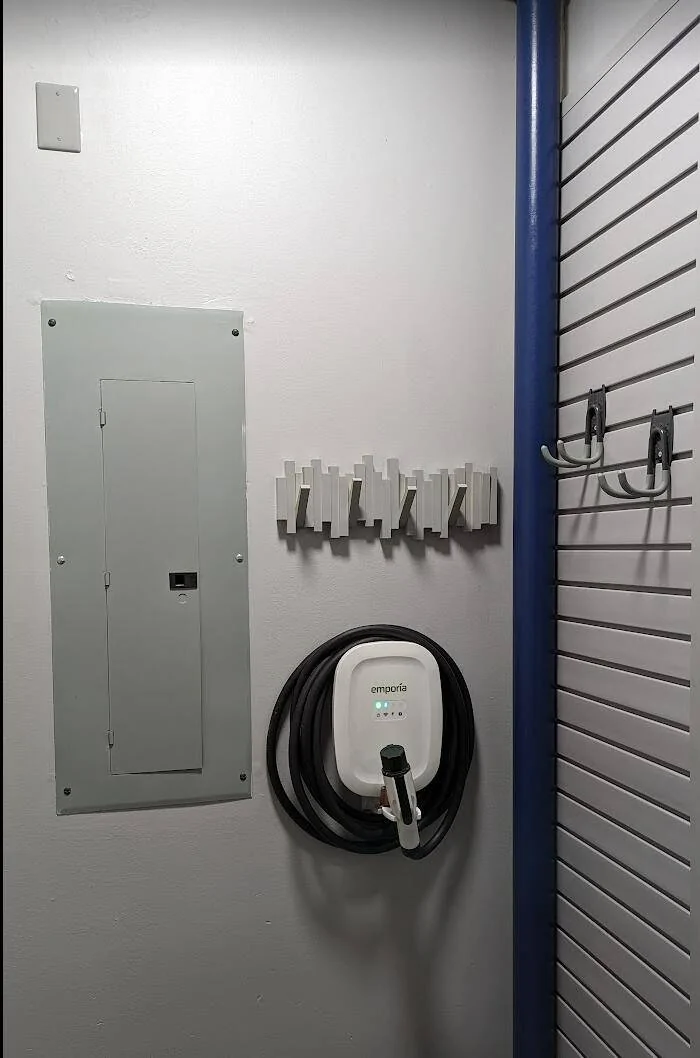
I went for a clean install of Emporia EVSE right next to the panel in the garage with no visible copper, so hardwired to avoid any plug overheating, which is basically an adapter, and get full 48Amp out of it. I love the clean install and ease of use. I do not have any need for flexibility to have all that additional wiring and large plug as I have 2 EA points 15 minutes away, EVGo 15 min away, and dealer with 2 chargers 10 min away.

Porsche Taycan Charger Comparison Needed 1696278180327
 
OP
OP

blackghost

Member
Joined
Aug 5, 2023
Threads
2
Messages
5
Reaction score
4
Location
949
Vehicles
2023 Taycan 4S
Country flag
I went for a clean install of Emporia EVSE right next to the panel in the garage with no visible copper, so hardwired to avoid any plug overheating, which is basically an adapter, and get full 48Amp out of it. I love the clean install and ease of use. I do not have any need for flexibility to have all that additional wiring and large plug as I have 2 EA points 15 minutes away, EVGo 15 min away, and dealer with 2 chargers 10 min away.

1696278180327.png
Incredible set up! Thank you for the quick reply. I have an Electrify America station about 5 minutes from my house (free for next 3 years) and also the gas station near my house has an EV charging station (1 min away) which isn't free but could be useful in a pinch.
 

SergeyIndy

Well-Known Member
First Name
Sergey
Joined
Dec 19, 2021
Threads
41
Messages
2,445
Reaction score
1,831
Location
Indianapolis
Vehicles
24 Macan GTS, 23 Taycan Turbo, 20 Cayenne Turbo
Country flag
I was also new to EVs and was stressing out how I am going to do this and was overwhelmed with all the setups and Hubble sockets required and all the ugly cabling all over. Then I just said what if I just do the cleanest and simplest install and see if it works and it did as Taycan is in the second slot in the garage from that wall, and the cable reached just fine behind the wife's Macan. I could not be happier with getting max output, ease of use, and consistent success by just starting the charger from its app, then plug it in overnight (once a week it appears), using Timer only, and in the morning I am at 85% after most friendly charging, not that it appears to matter much, as in the battery is very resilient and will outlast the car. However, my SoH went from just shy of 100% at delivery and 34 miles to 95% in 1,000 miles. I am about to get a 1,500 mile reading today.


RAHRCR

Well-Known Member
Joined
Jan 19, 2022
Threads
46
Messages
1,843
Reaction score
2,019
Location
Northeast, US
Vehicles
Taycan Cross Turismo 4S
Country flag
Hi, I am looking into purchasing a home charger but having trouble deciding on:

1. Hardwired vs. Plug In
2. ClipperCreek HCS-60 EV Charger vs. ChargePoint EV Charger

Read through the different posts on this forum but hard to get a real read on what is the best way to go.

I've heard hardwired gives you better power efficiency but 14-50 plug in gives you flexibility to change the charger if you need.

Aren't both chargers I'm looking at charging at 48 A? So is it worth paying almost double for the ClipperCreek charger?

Thank you for your insights!
1. Best to think of 40 and 48AMP charging as “overnight” charging. As such, there isnt much practical difference between the two in terms of capability. Cable length, weight, and flexibility come into play as key differences.

2. I went with a Wallbox 48AMP so I dont have direct experience with these two but both are very good. The reference to Tom M’s YT videos by another poster is warranted.
 

DougFrisk

Well-Known Member
First Name
Doug
Joined
Oct 24, 2022
Threads
4
Messages
380
Reaction score
588
Location
Duluth MN
Vehicles
No longer awaiting a 4CT
Country flag
My standard suggestion is:

1: Determine the maximum charge rate of your car. That's the limit, an EVSE capable of delivering more power than the car's charger can accept is pointless unless you decide you are "future proofing."

2: Determine what the maximum circuit your existing electric service can support without upgrade and consider sizing your charger based on that.


For overnight charging you don't need a huge amount of power, a 20 Amp 240 volt circuit can provide close to 4 KW or at least ten miles of range per hour of charging. If you are charging overnight, 8 PM to 6 AM you don't actually need any more than that.

I realize that people purchasing $100,000 cars aren't as price sensitive as some, but you don't get to the position of being able to purchase a $100,000 car by wasting money.

3: Contact your electric provider and ask about EV charging programs. There may be a set number of hours per day to charge so consider selecting and sizing your charger based on that conversation.

Your utility may have specific EV charging rates, specific charging times, and EVSEs approved by the utility. In my case there is a specific EV rate at 6.5 cents per KWh but it requires a dedicated meter that would cost $2,500 (in my particular situation). There is also a time of day rate with a six hour window overnight where I can charge for 8 cents per KWh. It would have taken about 500,000 miles of driving to recover the initial cost of installing the equipment to use the cheaper EV only metered rate.

Because I now needed to charge mostly in that six hour window I needed the charger to be sized based on that. A 40 amp 9.6 KW charger can perform a 60% charge for a big battery Taycan in that window and a 48 amp 11.5 KW charger can add a bit more than 70%.

For specific EVSEs, I qualified for a $500 rebate by buying an OCPP compatible charger that was on their approved list.

In my case, the car can charge at 11 KW, I had at least 70 amps of free capacity on the service panel so the decision to go with a 60 amp circuit and a 48 amp 11.5 KW EVSE made sense.

4: Don't bother with an outlet. Whatever EVSE you buy, have it hardwired.

There are a couple of things going on here. First, the latest National Electric Code requires all outlets in garages be GFCI protected. An EVSE is essentially a fancy GFGI protected extension cord. A hardwired EVSE does not need to be on a GFCI protected breaker. Rather than being double safe to have the EVSE plugged into a protected outlet, the very circuit testing that the EVSE and breaker are doing can look like a ground fault to the other, preventing you from charging.

The other issue is heat, this is a very high wattage device. That can lead to heat and overheating. While the wires will bet warm, the place where a failure is likely to occur is where there is an electrical connection. There are significant number of connections if you're plugging it. The wire's leading to the receptacle are connected to terminals on the back, that's one. When the EVSE is plugged in, the blades on the connect to the sockets in the receptacle, that's two. The blades on the plug are connected to the wires in the power cord to the EV, that's three. Finally the wires in the power cord connect to the power terminals in the EVSE, that's four. Compare that to a hardwired EVSE where the wires to the EVSE are connected directly to the power terminals in the EVSE, that's one and done.

A hardwired EVSE is simpler, safer, and cheaper. I think it looks better too. Since your car came with a mobile EVSE there's no reason to go the outlet route.
 

Tooney

Well-Known Member
Joined
Aug 14, 2021
Threads
746
Messages
4,469
Reaction score
3,651
Location
Ohio
Vehicles
2022 Taycan 4S
Country flag
I have a Wallbox Pulsar Plus 40 amp EVSE. It plugs into the recommended Hubbell 14-50 receptacle on a 50-amp dedicated circuit. My 22 Taycan has the standard 11kw on-board charger. I have been satisfied with the Wallbox EVSE. Battery can be fully charged overnight.

The nice thing about a plug-in EVSE is that should problems arise, it is easy to switch to a different EVSE (such as the Porsche Mobile Charger Plus which comes with the car) to help with troubleshooting the problem - is it the car, or the EVSE, etc. I had a need to do that when charging speed to the car was reduced. (Dealer eventually replaced the car's on-board charger.)

In the 18 months I have used it, during charging the Wallbox wall plug power cable and cable to the car get slightly warm, but not overheated.

Another point to consider is the quality of the EVSE's after-sale support. I needed technical support from Wallbox when I first installed the EVSE, and later during the charging speed problem. I got good telephone support from Wallbox.
Sponsored


Top