Sponsored

Nitrogen in Taycan Tyres

Keysersoze

Active Member
First Name
Keyser
Joined
Oct 14, 2022
Threads
5
Messages
31
Reaction score
30
Location
UK
Vehicles
Taycan GTS - 992 GTS on order
Country flag
Got my GTS in Feb 23 and tyre pressures need adjusting.

Do they come from the factory with Nitrogen or bog standard air ?

21” Spyder Wheels with P-Zero’s on my car
Sponsored

 

Sidicks

Well-Known Member
Joined
Jan 30, 2021
Threads
40
Messages
1,031
Reaction score
744
Location
Kent
Vehicles
Audi S1, Porsche Taycan ST GTS
Country flag
Got my GTS in Feb 23 and tyre pressures need adjusting.

Do they come from the factory with Nitrogen or bog standard air ?

21” Spyder Wheels with P-Zero’s on my car
You need to take your car back to the OPC to have them fill it with N-rated Nitrogen, otherwise your warranty will be void.
 

f1eng

Well-Known Member
First Name
Frank
Joined
Aug 19, 2021
Threads
48
Messages
4,765
Reaction score
8,335
Location
Oxfordshire, UK
Vehicles
Taycan CT4S, Ferrari 355, Merc 500E, Prius PHV
Country flag
Got my GTS in Feb 23 and tyre pressures need adjusting.

Do they come from the factory with Nitrogen or bog standard air ?

21” Spyder Wheels with P-Zero’s on my car
The use of Nitrogen to inflate tyres has a history in racing but, actually, the reason we used Nitrogen was that it had no moisure in it so the problem of serious over pressure when running over 100C tyre temperature when the moisture vapourised stopped being a problem - though it still was if the tyre company had mounted tyres in the rain without drying the rims.

IMO it probably isn't necessary for a road car even doing track days since road tyres will be destroyed by running that hot, I would guess (though I don't have the experience).

FWIW Michelin F1 tyres were at their best around 120C, Goodyear arounbd 100C and Bridgestone around 90C.

I control my tyre pressures at home using a 12V pump plugged into the car cigar lighter socket.
 

McgR

Well-Known Member
Joined
Sep 27, 2021
Threads
37
Messages
1,740
Reaction score
1,603
Location
Belgium
Vehicles
Taycan CT 4
Country flag
The use of Nitrogen to inflate tyres has a history in racing but, actually, the reason we used Nitrogen was that it had no moisure in it so the problem of serious over pressure when running over 100C tyre temperature when the moisture vapourised stopped being a problem - though it still was if the tyre company had mounted tyres in the rain without drying the rims.

IMO it probably isn't necessary for a road car even doing track days since road tyres will be destroyed by running that hot, I would guess (though I don't have the experience).

FWIW Michelin F1 tyres were at their best around 120C, Goodyear arounbd 100C and Bridgestone around 90C.

I control my tyre pressures at home using a 12V pump plugged into the car cigar lighter socket.
So in normal cars the principal reason to inflate with N2 is to get 20 euro extra for a tire change by selling special air. I did this long time ago on a BMW and even got special green caps. I think back then they advertised it as being more economic and more silent. I felt it immediately after driving away, in my wallet.
 
Last edited:


FlyingPoint

Well-Known Member
First Name
Cobblestone
Joined
Feb 20, 2022
Threads
21
Messages
642
Reaction score
720
Location
USA
Vehicles
Taycan 2024 4S , 2026 MY Juniper
Country flag
Just another dealer add on scam. I refuse to pay for it. They tried to charge me $199 on my MY21. I also told them to keep their POS green N tire valve caps.
 

Dee

Well-Known Member
First Name
Dee
Joined
Dec 14, 2018
Threads
78
Messages
3,501
Reaction score
4,040
Location
The Netherlands
Vehicles
A lot
Country flag
It has nothing to do with nitrogen as normal air already has about 79% of nitrogen in it (rest is about 20% oxygen and some other gasses)
It has to do with moisture in normal air.
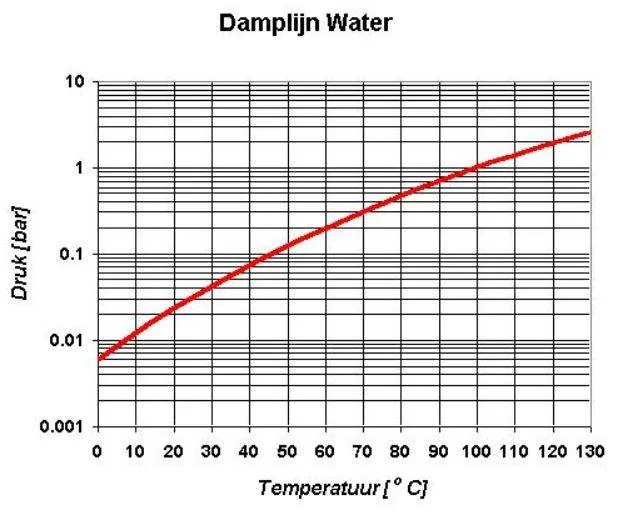
As shown below, the vapor pressure of water grows exponentially in relation to temperature while dry air doesn't (or dry nitrogen for that matter).
It does but not exponentially.
Porsche Taycan Nitrogen in Taycan Tyres verzadigde+dampspanning1

Like F1eng said, it's is from racing where tire pressure is very important.
In normal driving it's not of an issue.
In most air compressors there's a dryer build in (cuz pneumatic tools don't like moisture either).
Filling with nitrogen is just bs.
Also the story that nitrogen doesn't escape the tire more easily than air.
If you're losing pressure, your tire has a leak, not cuz of it being air instead of nitrogen. ?
 

Dee

Well-Known Member
First Name
Dee
Joined
Dec 14, 2018
Threads
78
Messages
3,501
Reaction score
4,040
Location
The Netherlands
Vehicles
A lot
Country flag
FWIW Michelin F1 tyres were at their best around 120C, Goodyear arounbd 100C and Bridgestone around 90C.
Quite interesting that the temperatures are that far apart from each manufacturer. ?

road tyres will be destroyed by running that hot, I would guess
Not with my Taycan but they become like jelly cake, and you'll be all over the place...
I literally had rolls of rubber in my profile.
Better use semi slicks next time...R888.
My cast iron brakes performed great though, once they were warm.
 
Last edited:


Dee

Well-Known Member
First Name
Dee
Joined
Dec 14, 2018
Threads
78
Messages
3,501
Reaction score
4,040
Location
The Netherlands
Vehicles
A lot
Country flag
https://en.wikipedia.org/wiki/Permeation

Air and nitrogen will eventually get out and H2O will eventually get in no matter what you do. Probably not even in noticeable amounts in a normal life of a tire.
No, it doesn't cuz normal vapor pressure of water (partial pressure, around 30 mbar@25°C) is always lower than your tire pressure.

If you want to do it correctly, you should vacuum the tire as low as possible (get all the air and moisture out) and fill it with dry air or nitrogen.
Maybe helium is also an option cuz it makes your car lighter.
Downside: helium molecules are so small they will escape the tire more easily than big molecules of nitrogen/oxygen.
 
Last edited:

Vercingetorix

Well-Known Member
Joined
Aug 6, 2021
Threads
23
Messages
991
Reaction score
1,067
Location
The O. C.
Vehicles
Taycan 4S
No, it doesn't cuz normal vapor pressure of water is always lower than your tire pressure.

If you want to do it correctly, you should vacuum the tire as low as possible and the fill with dry air or nitrogen.
Maybe helium is also an option cuz it makes your car lighter.
Downside: helium molecules are so small they will escape the tire more easily than big molecules of nitrogen/oxygen.
I am not talking about water.
 

wurzitup

Well-Known Member
First Name
MD
Joined
Aug 28, 2021
Threads
6
Messages
374
Reaction score
362
Location
CA
Vehicles
2022 Taycan
Country flag
Anyone who has run N2 in their tires will see the value in this small expense over air.
My experience has been- less frequent topping up as the nitrogen molecule is much larger and therefore doesn't pass through the rubber compound as quickly.
Also- due to the lack of water vapor, the pressure variances between say morning cold (50F) temperature tires and afternoon while driving during (95F) are much less.
It's almost worth more to not have to stop and top the tires up as frequently as much as anything else. As I recall they only loose a pound over a few months, versus 2-4 lbs. over the same length of time.
 

wurzitup

Well-Known Member
First Name
MD
Joined
Aug 28, 2021
Threads
6
Messages
374
Reaction score
362
Location
CA
Vehicles
2022 Taycan
Country flag
Larger than what??
"Air molecules"? ?
Either you're trolling or you don't know what you're talking about.
Air isn't a molecule....... it's a mix of molecules. But I'm sure you already know that since you're the one trolling now........ lol......


A quick search...... there's plenty of reading on it........


"Compressed air often contains water vapor, which will ”oxidize” metal parts of your tire system, reducing the functional capability of your tires. And, because oxygen gas molecules are smaller than nitrogen gas molecules, they escape—or ”permeate”—the outer rubber of your tires more quickly. As such, tires containing compressed air tend to lose about 1-3 PSI per month due to oxygen permeation, leaving the slow-escaping nitrogen behind.

Tires inflated with pure nitrogen tend to stay inflated longer—3-4 times as long. Nitrogen doesn’t retain water, and it doesn’t escape from the tire as quickly.

5 benefits of filling your tires with nitrogen
Your tires will stay inflated longer
As mentioned above, nitrogen won’t escape as quickly from your tires as compressed air, allowing your tires inflated for about 3-4 times longer than with just compressed air.
Your gas mileage will increase
When your tires are under-inflated, your fuel economy worsens due to roll resistance. Nitrogen filled tires will stay inflated longer, improving your gas mileage."
Sponsored


Top