prj
Well-Known Member
- Joined
- Jan 14, 2025
- Threads
- 7
- Messages
- 1,756
- Reaction score
- 2,318
- Location
- Estonia
- Website
- www.mapev.net
- Vehicles
- Taycan CT 4 - 2026

- Thread starter
- #1
1. Introduction
This is a post in a series, which will shed more light on some of the inner workings of the Taycan.
You can find Parts 1, 2 & 3 here:
Part 1: MapEV Diag
Part 2: The J1 Powertrain
Part 3: The Quest for the Perfect Tune
2. Getting started
For more in-depth information about the general architecture, please refer to Part 2. This is mostly a continuation of Part 2 with the J1.2 data.
Some power curves are still missing, notably the Turbo GT. I will add them as soon as I get the change to log the cars.
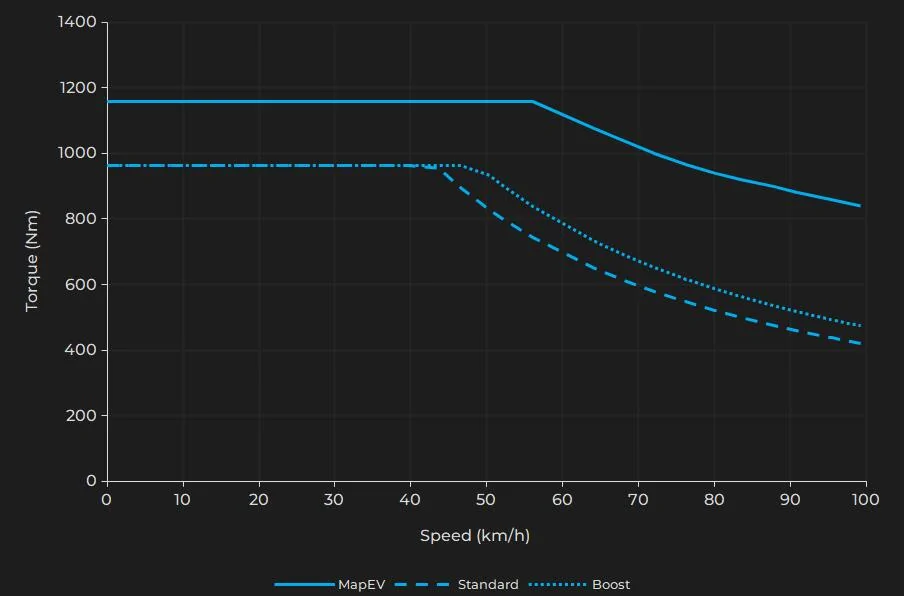
All the charts are taken from our new website: www.mapev.net
NB! Please note that all the maximum curves assume the MapEV launch control patch or launch control mode. Without it, the torque and power is lower.
3. Motor/Inverters
For the J1.2 there is a huge change. The change is that a small rear motor no longer exists. This means that all the 4WD models with PB+ apart from the top three (Turbo S, Turbo GT, RS e-tron GT Performance) have exactly the same hardware, and the same power potential.
We have now demonstrated that by tuning a 4S from 598 PS to 940 PS and posting a 100-200 time of 4.99s. Stock it did 9.44s.
The Turbo GT runs flat out in launch control, the rest are limited.
Unlike on the J1.1 launch control not only gives additional peak torque, it actually gives more torque throughout the band and for longer.
3.1. Rear Motor/Inverter - All except Taycan GT
The maximum torque in normal mode is 585 Nm. With launch control activated the maximum torque is 688 Nm. The launch torque has seen a large boost compared to J1.1. From 60Nm to 103 Nm.

3.2. Rear Motor/Inverter - Taycan GT
The maximum torque in normal mode is 830 Nm. In launch mode there is 3 Nm more, which is 833 Nm.

Additionally, only on the Turbo GT the gearing is 24.9% longer. So when the other variants have 16000 rpm (270km/h indicated), the Turbo GT only has 12000 RPM on the rear motor.
3.3. Front motor/Inverter - All except Taycan GT, Taycan Turbo S, Audi RS e-tron GT Performance (and RWD variants).
300Nm torque, no launch mode.

3.4. Front motor - Taycan Turbo GT, Taycan Turbo S, Audi RS-etron GT Performance
400Nm torque in normal mode, 470Nm torque in launch mode and more output in general than on J1.1.
4. Graphs for individual models.
4.1. Porsche Taycan Turbo GT - max 1170 PS / 1300 Nm


4.2. Porsche Taycan Turbo S - max 1080 PS / 1160 Nm
4.3 Porsche Taycan Turbo - max 940 PS / 990 Nm
4.4 Porsche Taycan GTS - max 940 PS / 990 Nm

4.5 Porsche Taycan 4S PB+ - max 940 PS / 990 Nm
4.6. Porsche Taycan 4S PB - max TBC PS / 990 Nm
Coming soon
4.7. Porsche Taycan 4 PB+ - max 940 PS / 990 Nm
4.8. Porsche Taycan 4 PB - max TBC PS / 990 Nm
Coming soon
4.9. Porsche Taycan Base (RWD) PB+ - max 670 PS / 690 Nm
4.10. Porsche Taycan Base (RWD) PB - max 670 PS / 690 Nm
4.11. S Audi e-tron GT - max 940 PS / 990 Nm
4.12. RS Audi e-tron GT - max 940 PS / 990 Nm
4.13. RS Audi e-tron GT Performance - max 1080 PS / 1160 Nm
5. Summary
If the J1.1 had a lot of tuning potential, then the J1.2 is off the scale. On the Taycan 4 PB+ you can gain more hp than it has stock.
My best guess is Porsche saw that manufacturing two separate motors makes no financial sense, and just went to the PPE rear motor for all the variants.
They then created a plethora of different power variants, in many cases just through software tuning.
Another very noteworthy development is that J1.2 holds the power at the top end much better. A J1.1 Turbo had a 800hp peak at 100km/h and at 200km/h you had 700hp left. The J1.2 Turbo still pumps out over 900hp at 200km/h. This is why they are over a second quicker 100-200.
Finally wheel torque wise the RS Performance and the Turbo S make more torque in first gear than the Turbo GT. After tuning They will be faster or as fast 0-100 km/h. Of course the Weissach is way faster because it weighs much less.
Meaning when comparing tuned variants the Turbo GT is only objectively faster at speeds over 100km/h and only at high SoC. And of course the Turbo GT has a significantly higher top speed due to the different gearing.
This is a post in a series, which will shed more light on some of the inner workings of the Taycan.
You can find Parts 1, 2 & 3 here:
Part 1: MapEV Diag
Part 2: The J1 Powertrain
Part 3: The Quest for the Perfect Tune
2. Getting started
For more in-depth information about the general architecture, please refer to Part 2. This is mostly a continuation of Part 2 with the J1.2 data.
Some power curves are still missing, notably the Turbo GT. I will add them as soon as I get the change to log the cars.
All the charts are taken from our new website: www.mapev.net
NB! Please note that all the maximum curves assume the MapEV launch control patch or launch control mode. Without it, the torque and power is lower.
3. Motor/Inverters
For the J1.2 there is a huge change. The change is that a small rear motor no longer exists. This means that all the 4WD models with PB+ apart from the top three (Turbo S, Turbo GT, RS e-tron GT Performance) have exactly the same hardware, and the same power potential.
We have now demonstrated that by tuning a 4S from 598 PS to 940 PS and posting a 100-200 time of 4.99s. Stock it did 9.44s.
The Turbo GT runs flat out in launch control, the rest are limited.
Unlike on the J1.1 launch control not only gives additional peak torque, it actually gives more torque throughout the band and for longer.
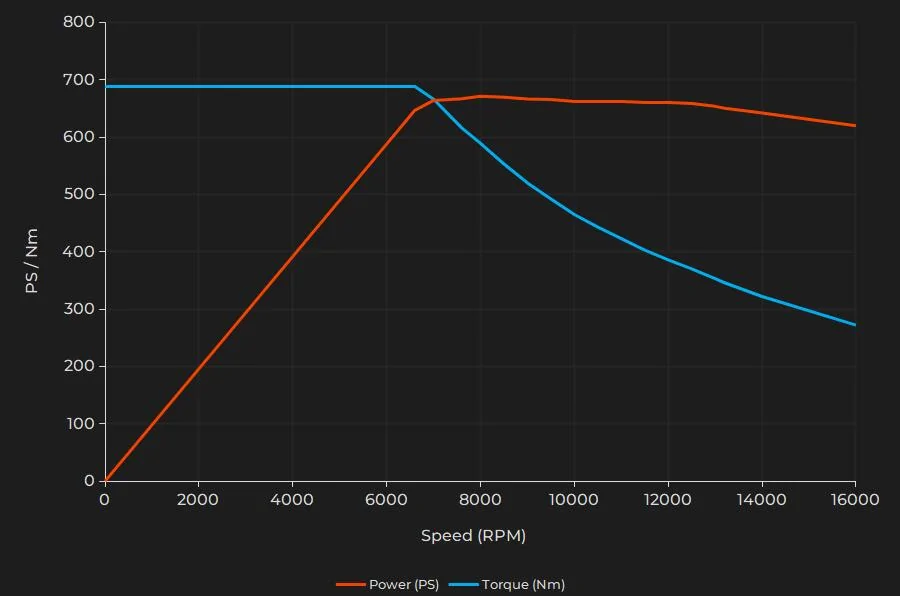
3.1. Rear Motor/Inverter - All except Taycan GT
The maximum torque in normal mode is 585 Nm. With launch control activated the maximum torque is 688 Nm. The launch torque has seen a large boost compared to J1.1. From 60Nm to 103 Nm.
3.2. Rear Motor/Inverter - Taycan GT
The maximum torque in normal mode is 830 Nm. In launch mode there is 3 Nm more, which is 833 Nm.
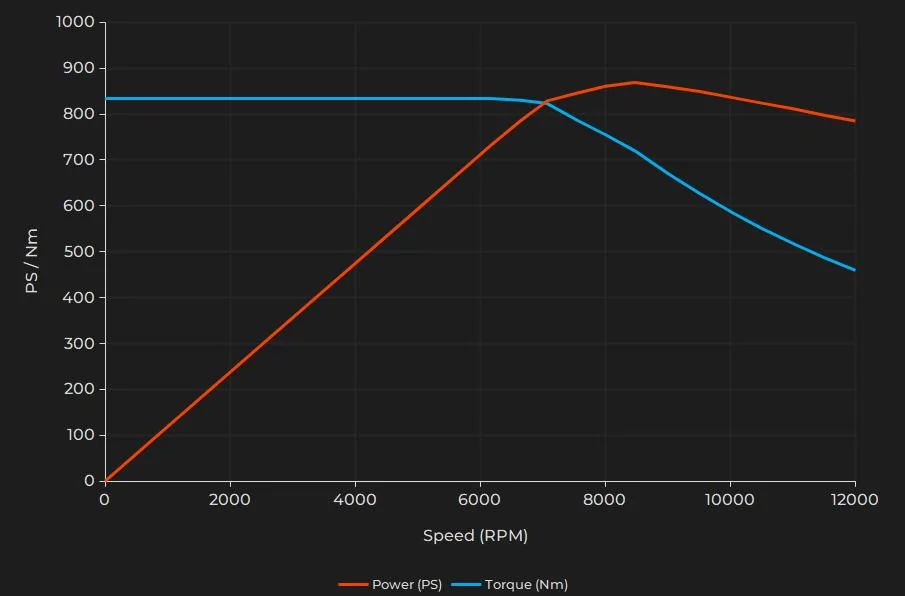
Additionally, only on the Turbo GT the gearing is 24.9% longer. So when the other variants have 16000 rpm (270km/h indicated), the Turbo GT only has 12000 RPM on the rear motor.
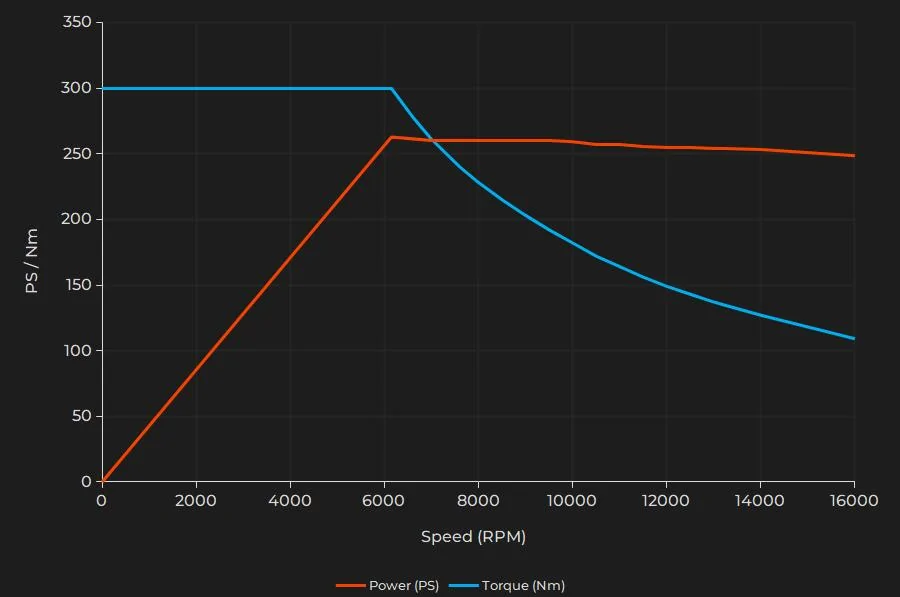
3.3. Front motor/Inverter - All except Taycan GT, Taycan Turbo S, Audi RS e-tron GT Performance (and RWD variants).
300Nm torque, no launch mode.
3.4. Front motor - Taycan Turbo GT, Taycan Turbo S, Audi RS-etron GT Performance
400Nm torque in normal mode, 470Nm torque in launch mode and more output in general than on J1.1.
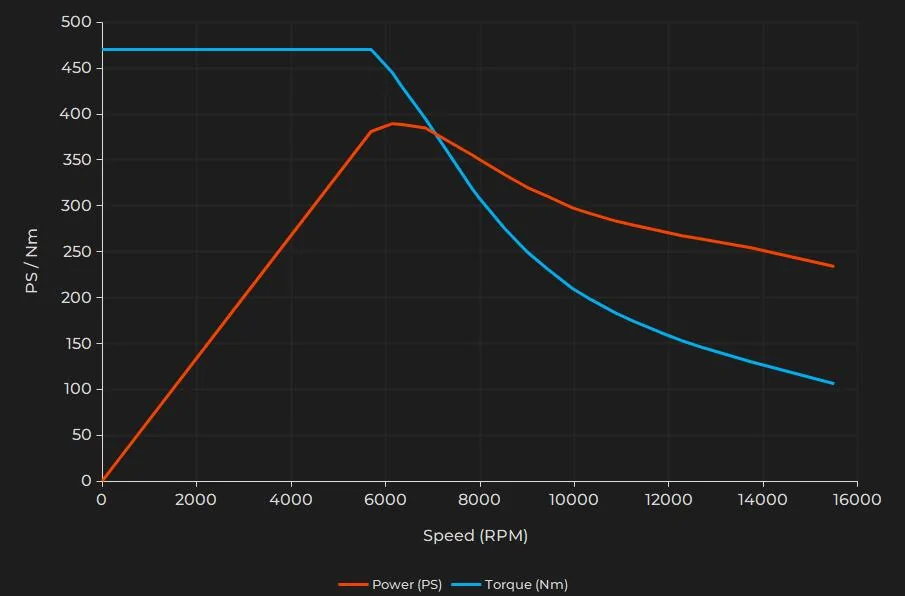
4. Graphs for individual models.
4.1. Porsche Taycan Turbo GT - max 1170 PS / 1300 Nm
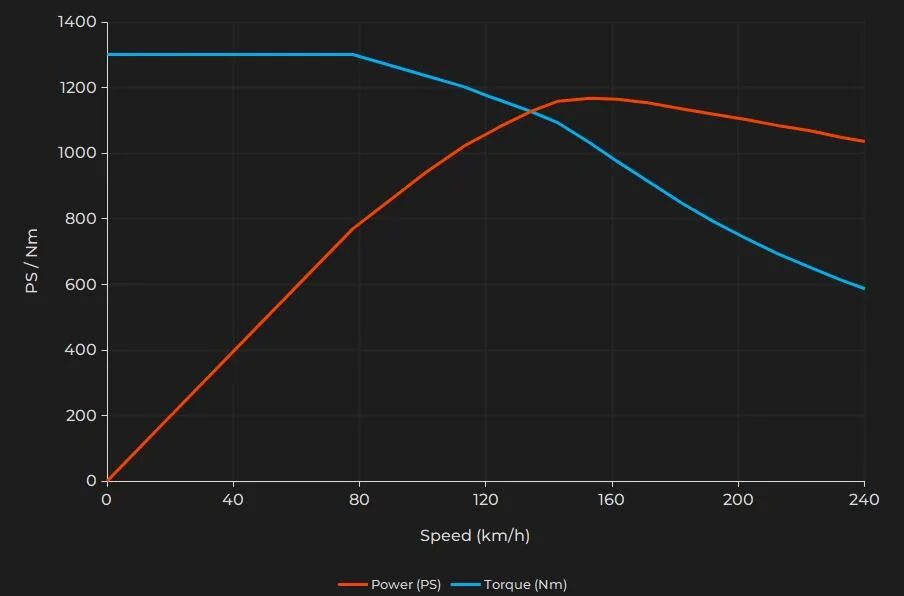
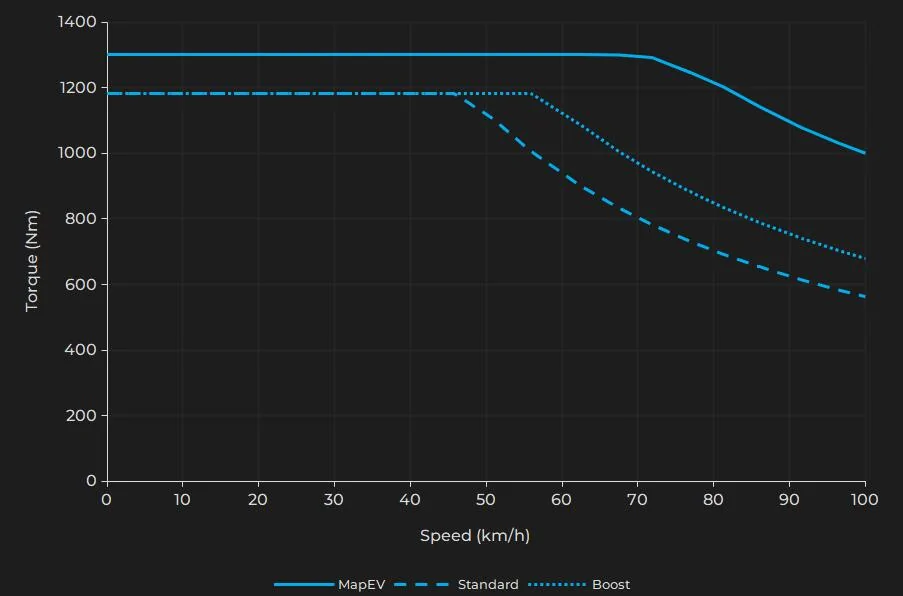
4.2. Porsche Taycan Turbo S - max 1080 PS / 1160 Nm
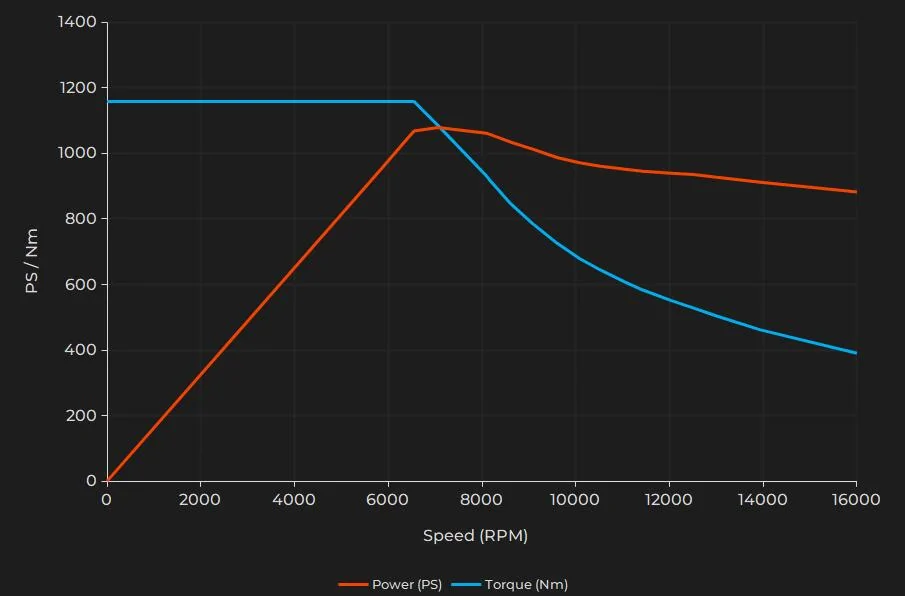
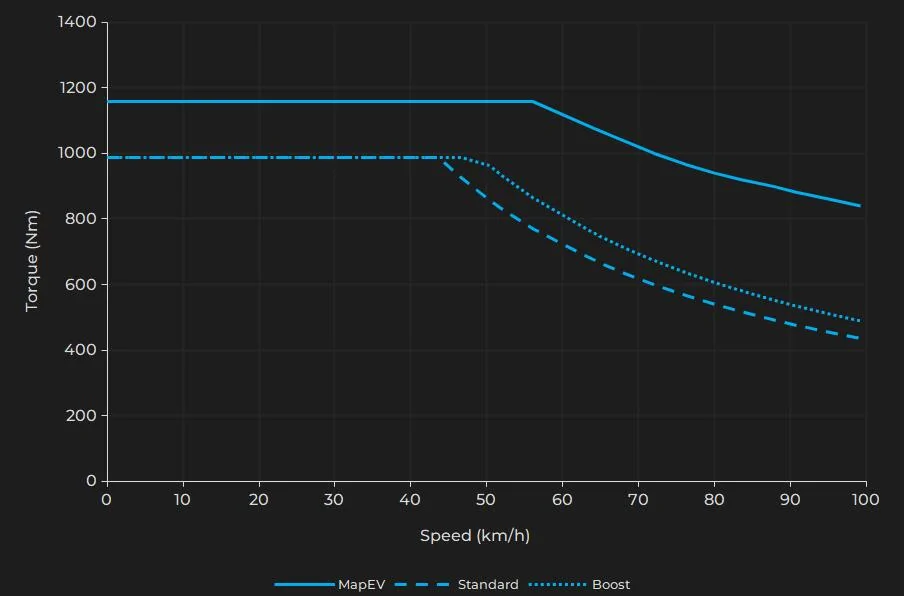
4.3 Porsche Taycan Turbo - max 940 PS / 990 Nm
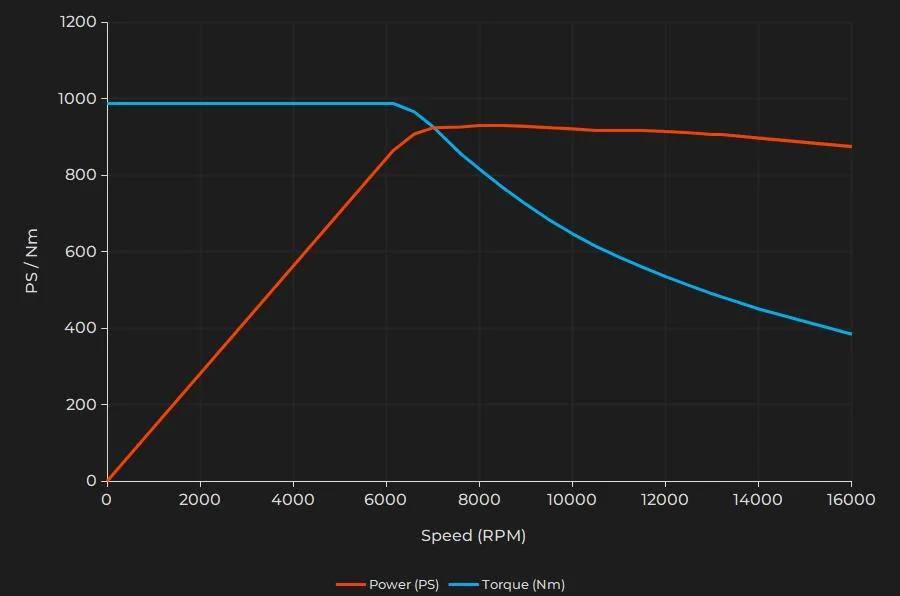
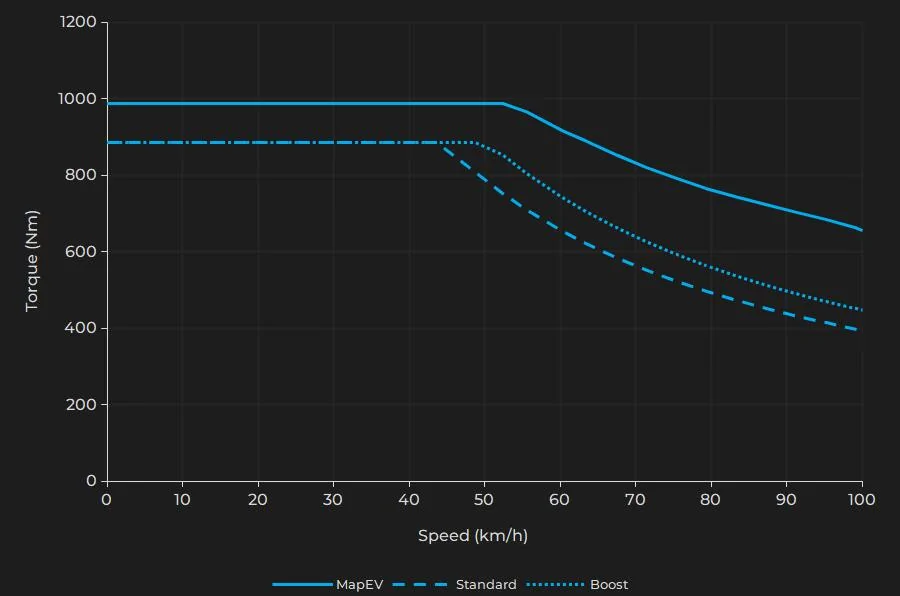
4.4 Porsche Taycan GTS - max 940 PS / 990 Nm
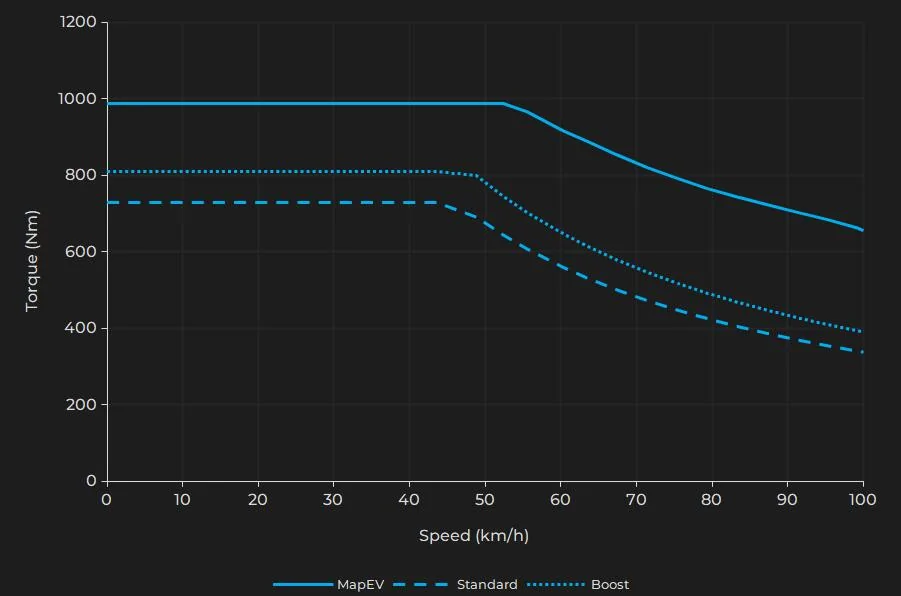
4.5 Porsche Taycan 4S PB+ - max 940 PS / 990 Nm
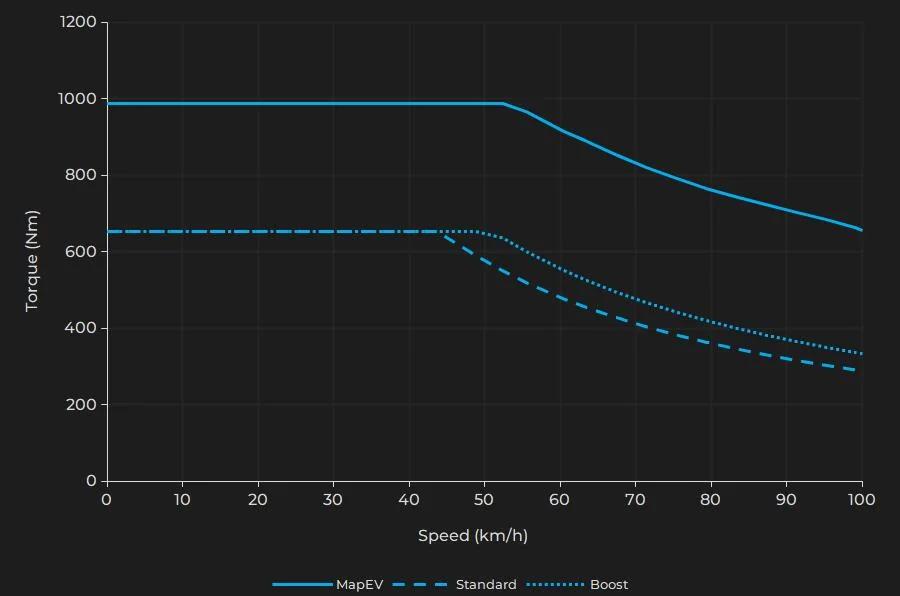
4.6. Porsche Taycan 4S PB - max TBC PS / 990 Nm
Coming soon
4.7. Porsche Taycan 4 PB+ - max 940 PS / 990 Nm
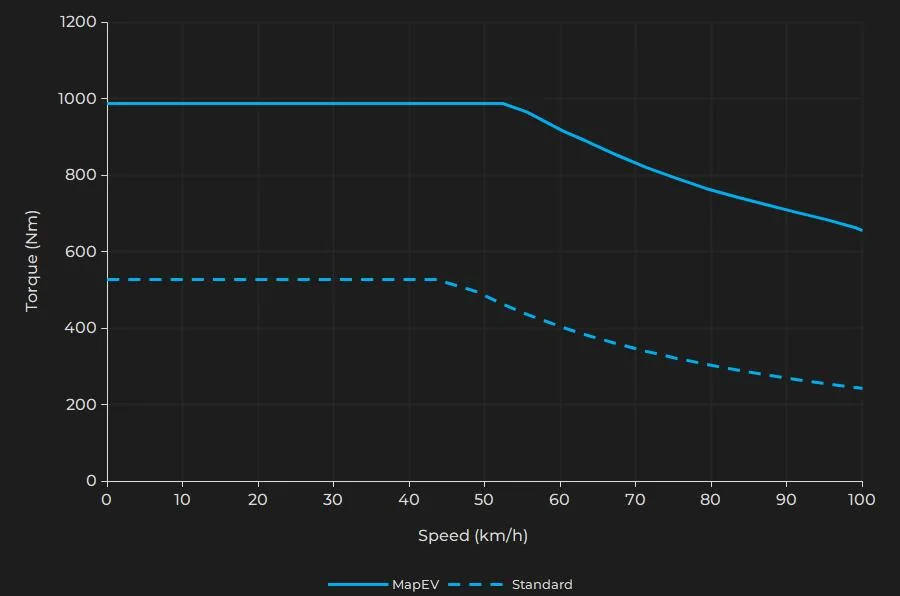
4.8. Porsche Taycan 4 PB - max TBC PS / 990 Nm
Coming soon
4.9. Porsche Taycan Base (RWD) PB+ - max 670 PS / 690 Nm
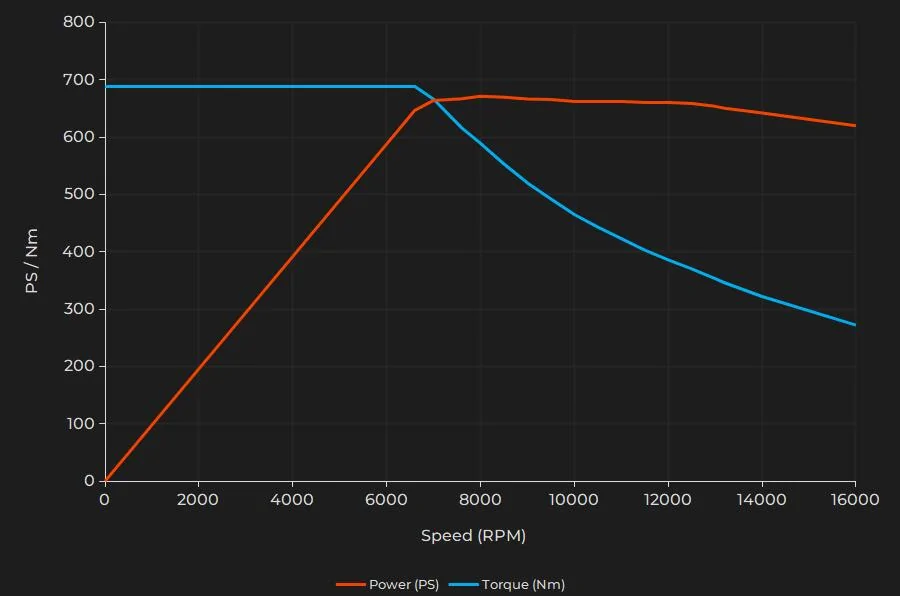
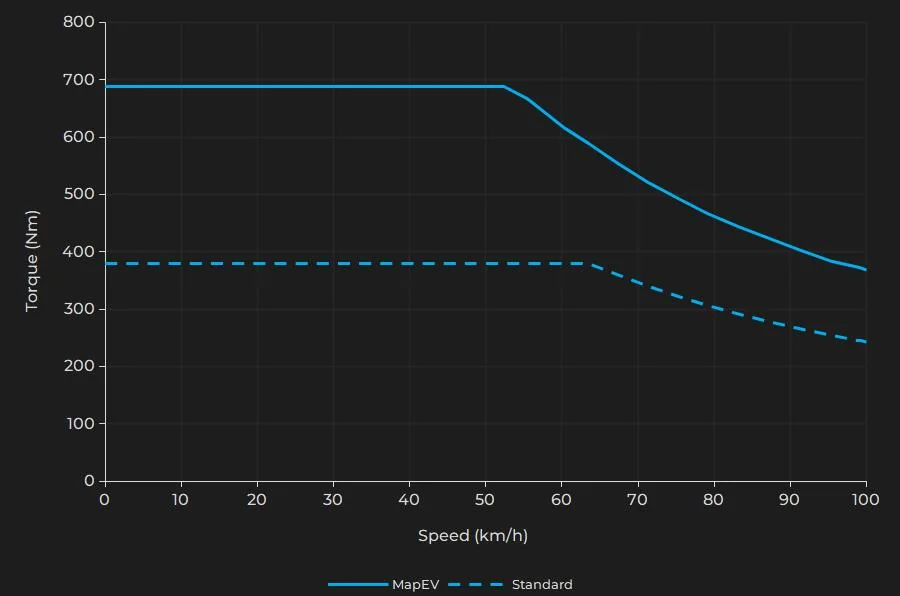
4.10. Porsche Taycan Base (RWD) PB - max 670 PS / 690 Nm
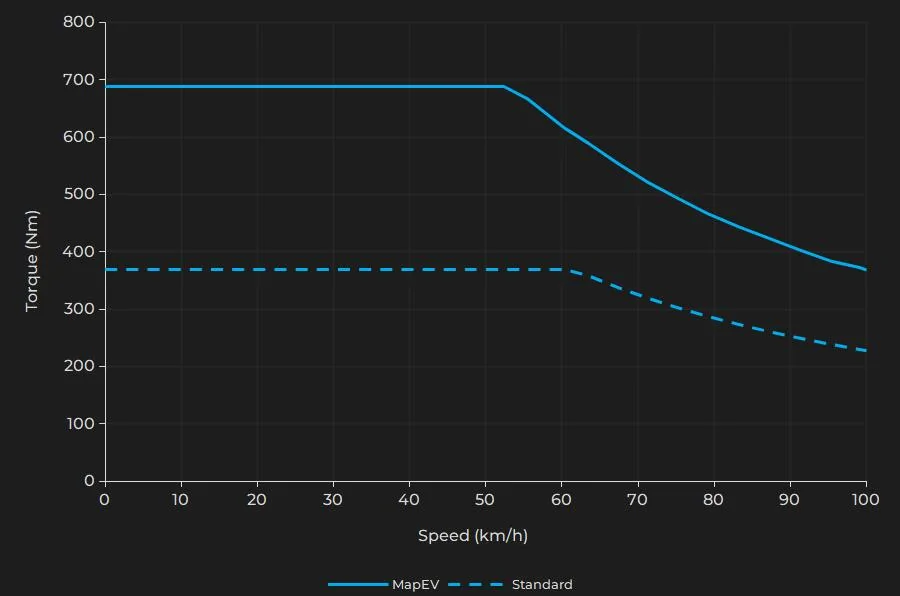
4.11. S Audi e-tron GT - max 940 PS / 990 Nm
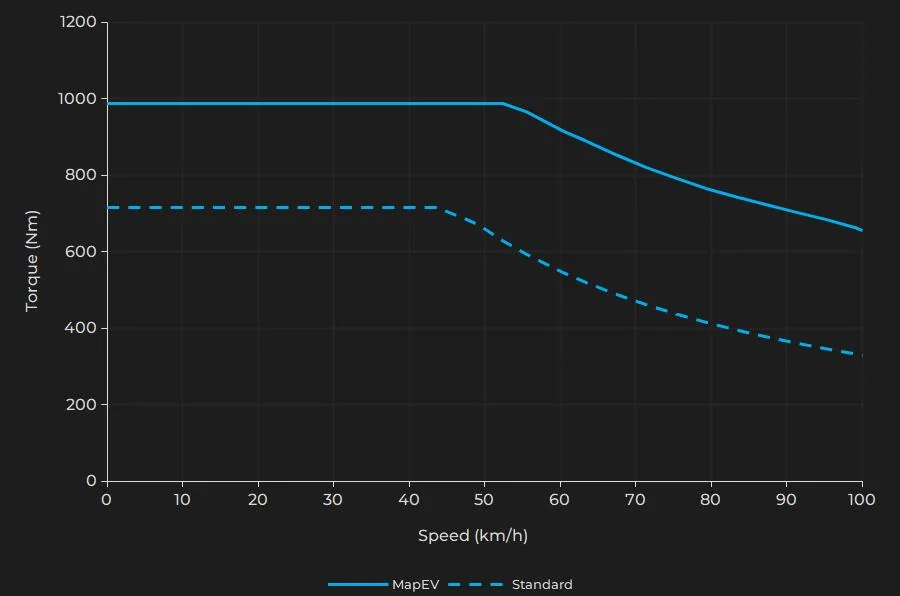
4.12. RS Audi e-tron GT - max 940 PS / 990 Nm
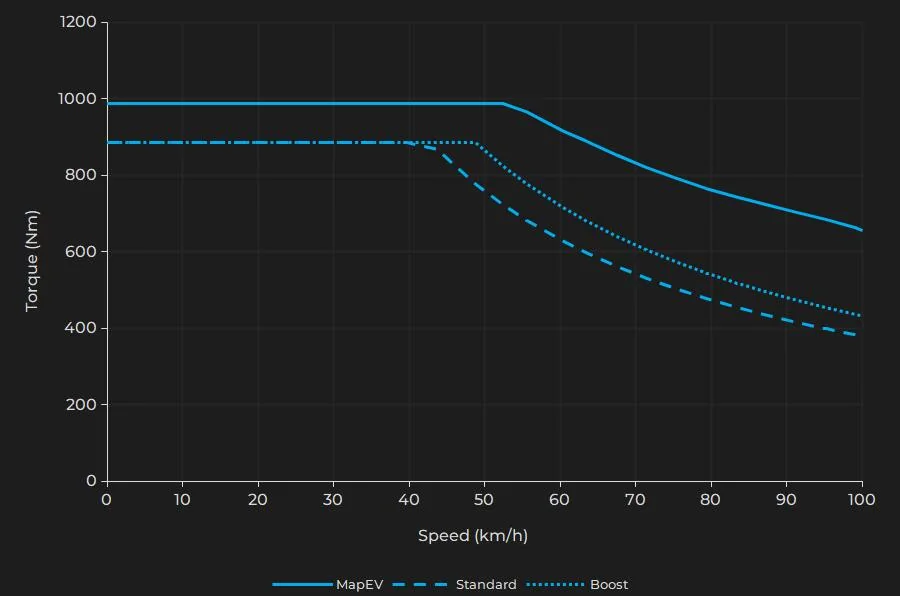
4.13. RS Audi e-tron GT Performance - max 1080 PS / 1160 Nm
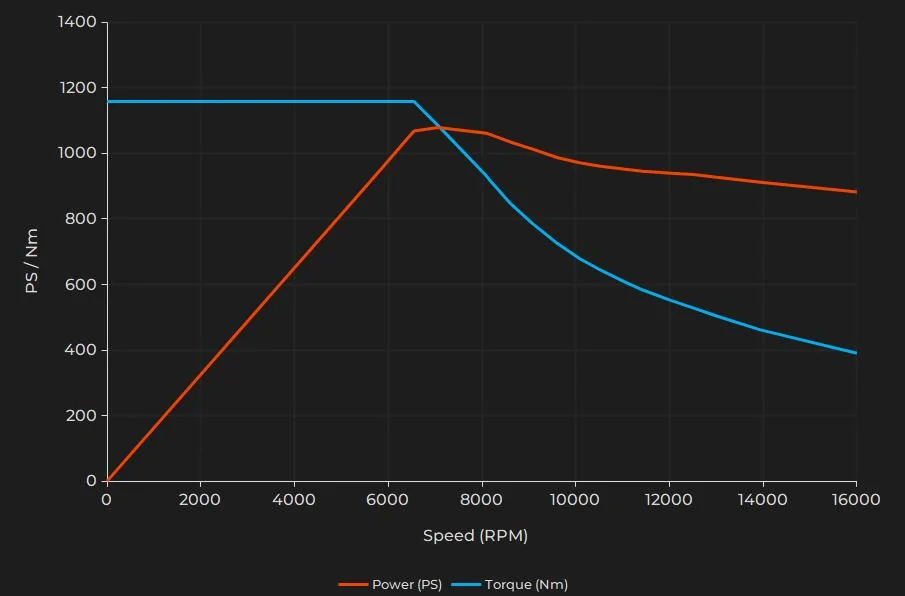
5. Summary
If the J1.1 had a lot of tuning potential, then the J1.2 is off the scale. On the Taycan 4 PB+ you can gain more hp than it has stock.
My best guess is Porsche saw that manufacturing two separate motors makes no financial sense, and just went to the PPE rear motor for all the variants.
They then created a plethora of different power variants, in many cases just through software tuning.
Another very noteworthy development is that J1.2 holds the power at the top end much better. A J1.1 Turbo had a 800hp peak at 100km/h and at 200km/h you had 700hp left. The J1.2 Turbo still pumps out over 900hp at 200km/h. This is why they are over a second quicker 100-200.
Finally wheel torque wise the RS Performance and the Turbo S make more torque in first gear than the Turbo GT. After tuning They will be faster or as fast 0-100 km/h. Of course the Weissach is way faster because it weighs much less.
Meaning when comparing tuned variants the Turbo GT is only objectively faster at speeds over 100km/h and only at high SoC. And of course the Turbo GT has a significantly higher top speed due to the different gearing.
Sponsored
Last edited: