Tooney
Well-Known Member
- Joined
- Aug 14, 2021
- Threads
- 788
- Messages
- 4,705
- Reaction score
- 3,813
- Location
- Ohio
- Vehicles
- 2022 Taycan 4S

- Thread starter
- #1
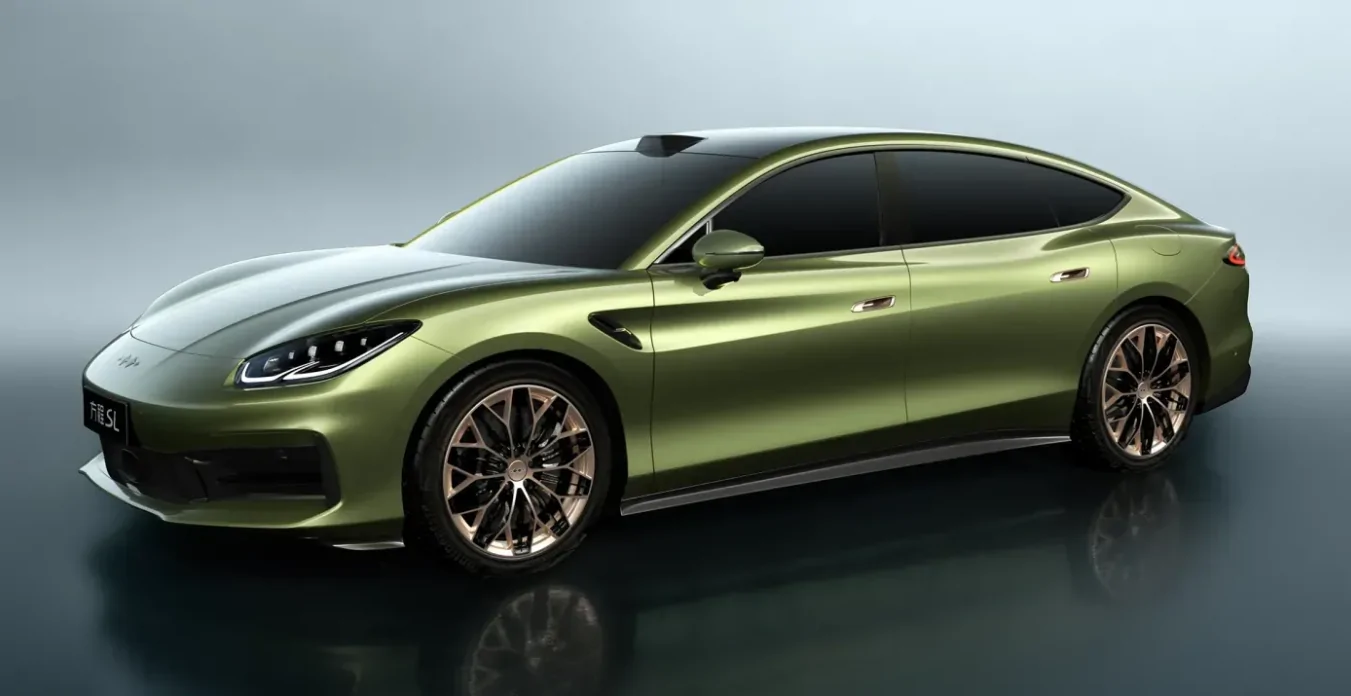
BYD’s Fang Cheng Bao Formula S Undercuts Porsche by $96,000: Blade Battery Makes It Possible

The Battery Engineering That Makes the Price Possible
The price gap between the Formula S and a comparably capable Porsche Taycan AWD — which starts above $130,000 in the United States — is not primarily a product of subsidies or loss-leading. It is an engineering and supply-chain outcome that BYD's rivals cannot easily replicate.
BYD manufactures around 75 percent in-house, including its battery cells, automotive-grade IGBT power semiconductors, electric motors, and vehicle software, through subsidiaries including BYD Semiconductor. For comparison, independent analysts estimate Tesla China's in-house component share at roughly 46 percent. The Blade Battery 2.0's research and development costs are amortized across a lineup that sold over four million vehicles in 2025. BYD also holds stakes in lithium mining operations across China, Africa, and South America, and operates its own roll-on/roll-off cargo ships for vehicle export — each link in that chain eliminates a supplier profit margin that a Western automaker pays to third parties. A March 2026 analysis by Rhodium Group, reported by CNBC, found that vertical integration lifted BYD's margins despite lower consumer prices.
The Blade Battery 2.0 itself is the specific engineering enabler behind both the price and the charging speed. BYD unveiled Blade Battery 2.0 on March 5, 2026, splitting the lineup into two physical formats for the first time.
The Short Blade 2.0 — the format in the Formula S, measuring approximately 450–580 mm in cell length — is engineered for charging speed rather than maximum range. Its architecture includes what BYD's technical documentation calls a "Lithium-Ion High-Speed Channel," a directionally engineered cathode with multi-level particle sizes that enables rapid lithium-ion deintercalation without triggering dangerous lithium plating. An ultra-thin solid electrolyte interphase (SEI) membrane with electrode self-repair capability allows the cell to sustain a peak charge rate of 8C — meaning the pack can absorb energy at eight times its full-capacity rate simultaneously — and a peak discharge rate of 16C. A full Short vs Long Blade 2.0 breakdown documents these specifications in detail.
That 8C charge rate is only physically achievable on an 800-volt electrical architecture. The relationship is a matter of basic electrical physics: power equals voltage multiplied by current (P = V × I). Delivering 1,500 kilowatts of charging power through an 800-volt system requires approximately 1,875 amperes of current. At a conventional 400-volt architecture, the same power delivery would require roughly 3,750 amperes — far beyond what any production charging cable can safely carry. The 800V platform is not a marketing specification; it is the physical prerequisite that makes the Short Blade 2.0's charging speed possible. The Blade Battery 2.0 launch at Electrive provides an independent technical account of these parameters.
The result: from 10 percent to 70 percent state of charge in five minutes; from 10 percent to 97 percent in nine minutes, at BYD's proprietary Flash Charging stations. BYD began mass production in March 2026 and has deployed the second-generation Blade Battery across more than ten vehicle models.
. . .
Global Ambitions Under a Different Badge
Outside China, Fang Cheng Bao's vehicles currently reach international markets exclusively through Denza and BYD badges. The Bao 5, for example, is sold internationally as the Denza B5. Industry analysts and automotive press have noted that the Formula S's "Life Metal Aesthetics" design language mirrors the Denza Z sports car's visual identity closely — a pattern consistent with the brand's practice of creating a product under the Fang Cheng Bao identity in China before exporting it under the Denza name for premium-market positioning. A Carscoops Beijing Auto Show report noted the visual continuity between the Formula series and Denza's design vocabulary.
Whether Denza-badged Formula S variants will reach European or other markets has not been confirmed by BYD. In the United States, the question is legally moot: the US Department of Commerce's Bureau of Industry and Security (BIS) issued a final rule in January 2025 prohibiting the sale or import of connected passenger vehicles from Chinese-controlled companies, effective model year 2027. The rule applies directly to BYD.
The Battery Engineering That Makes the Price Possible
The price gap between the Formula S and a comparably capable Porsche Taycan AWD — which starts above $130,000 in the United States — is not primarily a product of subsidies or loss-leading. It is an engineering and supply-chain outcome that BYD's rivals cannot easily replicate.
BYD manufactures around 75 percent in-house, including its battery cells, automotive-grade IGBT power semiconductors, electric motors, and vehicle software, through subsidiaries including BYD Semiconductor. For comparison, independent analysts estimate Tesla China's in-house component share at roughly 46 percent. The Blade Battery 2.0's research and development costs are amortized across a lineup that sold over four million vehicles in 2025. BYD also holds stakes in lithium mining operations across China, Africa, and South America, and operates its own roll-on/roll-off cargo ships for vehicle export — each link in that chain eliminates a supplier profit margin that a Western automaker pays to third parties. A March 2026 analysis by Rhodium Group, reported by CNBC, found that vertical integration lifted BYD's margins despite lower consumer prices.
The Blade Battery 2.0 itself is the specific engineering enabler behind both the price and the charging speed. BYD unveiled Blade Battery 2.0 on March 5, 2026, splitting the lineup into two physical formats for the first time.
The Short Blade 2.0 — the format in the Formula S, measuring approximately 450–580 mm in cell length — is engineered for charging speed rather than maximum range. Its architecture includes what BYD's technical documentation calls a "Lithium-Ion High-Speed Channel," a directionally engineered cathode with multi-level particle sizes that enables rapid lithium-ion deintercalation without triggering dangerous lithium plating. An ultra-thin solid electrolyte interphase (SEI) membrane with electrode self-repair capability allows the cell to sustain a peak charge rate of 8C — meaning the pack can absorb energy at eight times its full-capacity rate simultaneously — and a peak discharge rate of 16C. A full Short vs Long Blade 2.0 breakdown documents these specifications in detail.
That 8C charge rate is only physically achievable on an 800-volt electrical architecture. The relationship is a matter of basic electrical physics: power equals voltage multiplied by current (P = V × I). Delivering 1,500 kilowatts of charging power through an 800-volt system requires approximately 1,875 amperes of current. At a conventional 400-volt architecture, the same power delivery would require roughly 3,750 amperes — far beyond what any production charging cable can safely carry. The 800V platform is not a marketing specification; it is the physical prerequisite that makes the Short Blade 2.0's charging speed possible. The Blade Battery 2.0 launch at Electrive provides an independent technical account of these parameters.
The result: from 10 percent to 70 percent state of charge in five minutes; from 10 percent to 97 percent in nine minutes, at BYD's proprietary Flash Charging stations. BYD began mass production in March 2026 and has deployed the second-generation Blade Battery across more than ten vehicle models.
. . .
Global Ambitions Under a Different Badge
Outside China, Fang Cheng Bao's vehicles currently reach international markets exclusively through Denza and BYD badges. The Bao 5, for example, is sold internationally as the Denza B5. Industry analysts and automotive press have noted that the Formula S's "Life Metal Aesthetics" design language mirrors the Denza Z sports car's visual identity closely — a pattern consistent with the brand's practice of creating a product under the Fang Cheng Bao identity in China before exporting it under the Denza name for premium-market positioning. A Carscoops Beijing Auto Show report noted the visual continuity between the Formula series and Denza's design vocabulary.
Whether Denza-badged Formula S variants will reach European or other markets has not been confirmed by BYD. In the United States, the question is legally moot: the US Department of Commerce's Bureau of Industry and Security (BIS) issued a final rule in January 2025 prohibiting the sale or import of connected passenger vehicles from Chinese-controlled companies, effective model year 2027. The rule applies directly to BYD.
Sponsored



 I somehow doubt whoever comes after trump will be fast to make changes