snstevens
Well-Known Member
- First Name
- Sam
- Joined
- Jul 10, 2020
- Threads
- 33
- Messages
- 1,379
- Reaction score
- 1,780
- Location
- Kirkland, WA United States
- Vehicles
- Taycan 4S

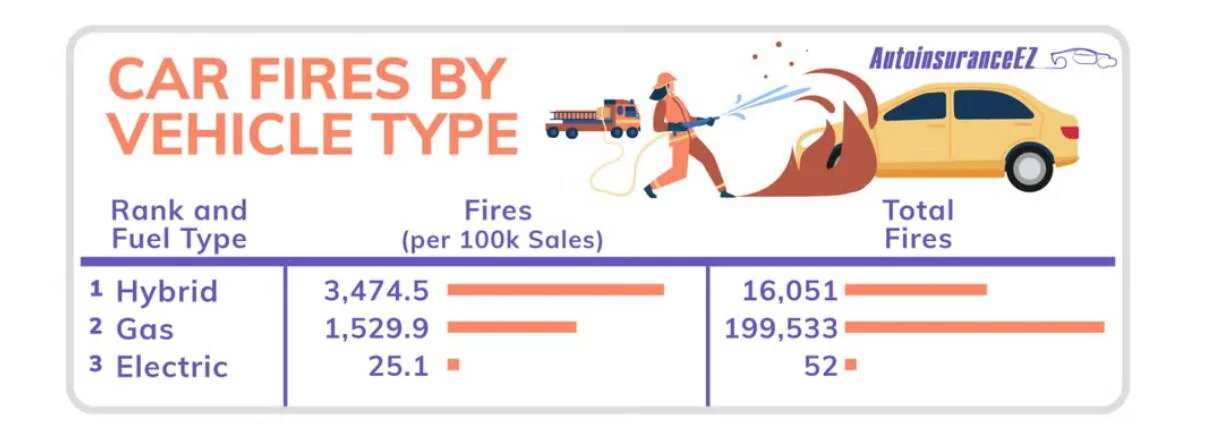
As I've looked into this further I was curious as to why Hybrid vehicles were worse fire risks. Here is what I read, and it seems to make sense.POST UPDATE
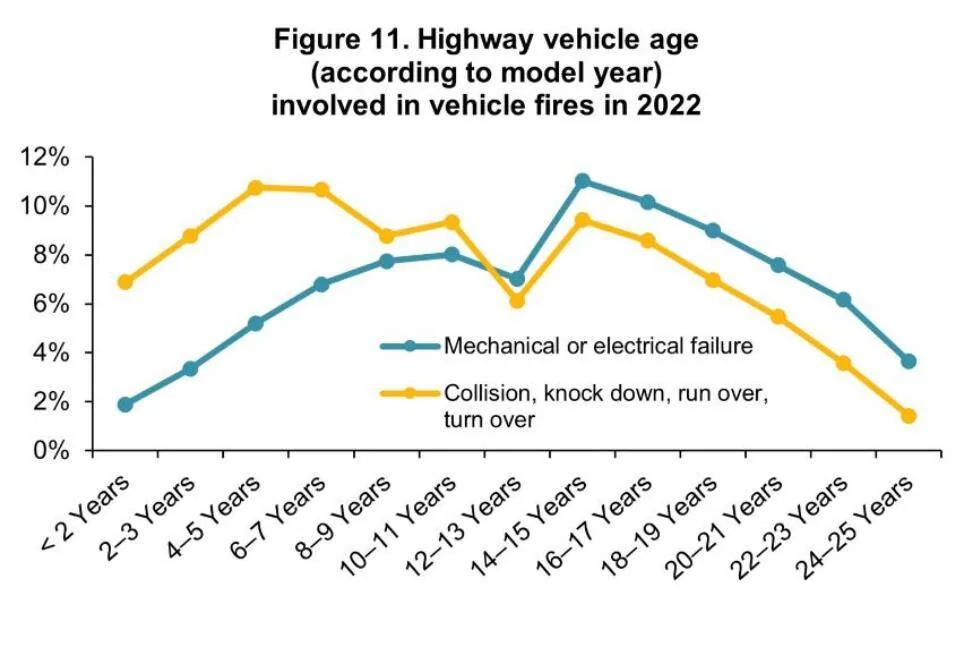
So I re-read the Car and Driver article, and they are actually questioning where the statistic of "x,xxx Fires / 100k Sales" actually came from and which year it may apply to. While the "Total Fires" adds up to a number roughly equal to the total in the image, without defining the meaning of "100k Sales" (is this yearly or total?) it is hard to understand the meaning of the statistics. I'll look into this further.
Original Post
Some interesting facts garnered from Perplexity.
“The exact number of auto fires in 2024 has not been finalized, but estimates suggest the trend remained consistent with previous years. Between 2018 and 2022, U.S. fire departments responded to an average of 215,096 vehicle fires annually. In 2021, there were approximately 174,000 highway vehicle fires reported, and this figure has shown relative stability in recent years.”
And from Car and Driver

Question
Are electric vehicles more prone to fires than gasoline vehicles
Answer
Electric vehicles (EVs) are significantly less prone to fires compared to gasoline-powered vehicles. Data from the U.S. National Transportation Safety Board shows that gasoline vehicles are 60 times more likely to catch fire than EVs, with hybrids being 138 times more likely For every 100,000 vehicles sold, EVs experience about 25 fires, compared to 1,530 fires for gasoline vehicles and 3,475 fires for hybrids.
Factors contributing to hybrid vehicle fires:
- Heat generation: The presence of both a gasoline engine and an electric battery system creates more heat than in EVs or gas-powered vehicles alone.
- Complexity: The dual power sources in hybrids increase the complexity of the vehicle's systems, potentially leading to more points of failure.
- Battery stress: The additional heat generated by the gasoline engine may put more stress on the lithium-ion battery, increasing the risk of thermal runaway.
SPECULATION -- This information doesn't distinguish between Plug-In Hybrid and simple Hybrid Assist engines, so I'm not sure about Point 3. However, based on conversations with Plug-In Hybrid owners, I think there is a tendency to run the battery in a Plug-In hybrid from 100% SOC to 0% SOC and then back up to 100% over and over for cars that travel more than 50 miles/day. From my understanding of battery chemistry this charging profile may weaken the battery which could contribute to the likelihood of fire.
As stated, this is speculation, so please pass along other articles that provide greater insight.
Sponsored