Sponsored

Charging patterns

B61

Well-Known Member
First Name
Bine
Joined
May 31, 2021
Threads
10
Messages
2,722
Reaction score
1,724
Location
SI
Vehicles
4S (8/2025), CT4 (9/2021-8/2025, 65k km)
Country flag
Is that really correct? Never heard that figure mentioned for charging cycles. 100k miles perhaps but not that. Do you have any reference for that 100 k cycles??
I’ve seen somewhere that battery life is 2500 charging cycles, but don’t ask me for a reference.
Sponsored


Scandinavian

Well-Known Member
First Name
Peter
Joined
Nov 3, 2019
Threads
52
Messages
3,904
Reaction score
3,549
Location
France
Vehicles
Taycan T, Aston Martin DB9, Porsche 996 C4 Cab, i4
Country flag
I’ve seen somewhere that battery life is 2500 charging cycles, but don’t ask me for a reference.
That would be very much in line with the article linked above.

And at EPA range that would mean 2500x200miles = 500 000 miles. That would be amazing result!
 
  • Like
Reactions: B61

B61

Well-Known Member
First Name
Bine
Joined
May 31, 2021
Threads
10
Messages
2,722
Reaction score
1,724
Location
SI
Vehicles
4S (8/2025), CT4 (9/2021-8/2025, 65k km)
Country flag
That would be very much in line with the article linked above.

And at EPA range that would mean 2500x200miles = 500 000 miles. That would be amazing result!
Yep…or 2500x400km = 1M kms :clap: …or something in between…
 

800v

Well-Known Member
Joined
Jul 26, 2022
Threads
5
Messages
170
Reaction score
208
Location
WA
Vehicles
2020 Taycan Turbo S (Carrara white metallic)
Country flag
I currently charge my car up to the recommended 85% daily. My daily driving typically consumes about 25% of battery on weekdays. Curious what is better for the longevity of the battery, charging daily or let it go down to 30-35% before charging.
From what I have read, the are three big factors that determine battery life:

1. Don't discharge/charge to the min/max. So, don't often charge above 85/80 %, or discharge under 20%.

2. Don't have too many charge cycles. I think that means it's better to charge once a week from 30 to 80% instead of charging daily from 73 to 80%.
Edit: this may be wrong as pointed out below, see: this post

3. Temperature: don't charge when the battery is too hot (> 35c). But the Taycan has excellent battery cooling so that should not be a problem.

Just to add: I personally think fast DC charging under about 200kw (set the "slow" charge option in the PCM) has no bad effect. I think that it is a bit of a myth that fast DC charging is bad. Most of this comes from an older study on Nissan Leafs in Arizona which did not have active battery cooling.. And thus the DC charged batteries got too hot which would be the real cause of battery degradation. But for a modern vehicle with active cooling I don't think this is an issue any longer.
Edit: again, I this is my opinion but it might be wrong, see the posts below :)

And also, don't worry too much about this. Modern battery management systems are great, just enjoy the car :)
 
Last edited:

Scandinavian

Well-Known Member
First Name
Peter
Joined
Nov 3, 2019
Threads
52
Messages
3,904
Reaction score
3,549
Location
France
Vehicles
Taycan T, Aston Martin DB9, Porsche 996 C4 Cab, i4
Country flag
From what I have read, the are three big factors that determine battery life:

1. Don't discharge/charge to the min/max. So, don't often charge above 85/80 %, or discharge under 20%.

2. Don't have too many charge cycles. I think that means it's better to charge once a week from 30 to 80% instead of charging daily from 73 to 80%.

3. Temperature: don't charge when the battery is too hot (> 35c). But the Taycan has excellent battery cooling so that should not be a problem.

Just to add: I think fast DC charging under about 200kw (set the "slow" charge option in the PCM) has _no_ bad effect. I think that it's a myth that fast DC charging is bad. Most of this comes from an older study on Nissan Leafs in Arizona which did not have active battery cooling.. And thus the DC charged batteries got too hot which would be the real cause of battery degradation. But for a modern vehicle with active cooling I don't think this is an issue any longer.

And also, don't worry too much about this. Modern battery management systems are great, just enjoy the car :)
Did you read the post linked above?
My take from that is that small charges would be much better than deeper charges without going too low.

https://www.taycanforum.com/forum/threads/charging-best-practices.7081/page-3#post-101651


800v

Well-Known Member
Joined
Jul 26, 2022
Threads
5
Messages
170
Reaction score
208
Location
WA
Vehicles
2020 Taycan Turbo S (Carrara white metallic)
Country flag

whitex

Well-Known Member
Joined
Jul 30, 2021
Threads
87
Messages
8,195
Reaction score
7,236
Location
WA, USA
Vehicles
2023 Taycan TCT, 2024 Q8 eTron P+
Country flag
Recommended is 80%.
I was charging 100%, when i knew that i’ll need more than 20% during or in the next day.
After retirement, i charge up to 80%.

edit: check also @Dee interesting comments regarding SoH, related to charging “strategy”.
Where did the 80% number come from? Is there an official recommendation from Porsche anywhere?
 

Fish Fingers

Well-Known Member
Joined
Feb 20, 2021
Threads
50
Messages
2,528
Reaction score
3,279
Location
UK
Vehicles
Sold
Country flag
Did you read the post linked above?
My take from that is that small charges would be much better than deeper charges without going too low.

https://www.taycanforum.com/forum/threads/charging-best-practices.7081/page-3#post-101651
?
And it also states to avoid fast chargers where possible.
So try and avoid fast DC chargers if/when you can.

My conclusion on all this:

Basically, frequent overnight slow charging up to 80/85% - where the battery hasn't been allowed to get to a low SoC (<20%) is the sweet spot for regular use.

Unless car is being left unused for long periods, in which case leave it about 60% SoC.


whitex

Well-Known Member
Joined
Jul 30, 2021
Threads
87
Messages
8,195
Reaction score
7,236
Location
WA, USA
Vehicles
2023 Taycan TCT, 2024 Q8 eTron P+
Country flag
The relevant bit from the Good to Know app was posted on Page 1 by @Scandinavian.
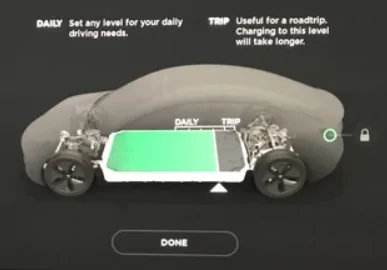
Ah, missed that. so approximately 80-85% is what Porsche recommends. Wouldn't it be nice if they incorporated the recommendation in their User Interface like Tesla does (the screen below is from Tesla "set charging limit" screen).
Porsche Taycan Charging patterns 1665376120885
 

800v

Well-Known Member
Joined
Jul 26, 2022
Threads
5
Messages
170
Reaction score
208
Location
WA
Vehicles
2020 Taycan Turbo S (Carrara white metallic)
Country flag
?
And it also states to avoid fast chargers where possible.
So try and avoid fast DC chargers if/when you can.
Of course, I cannot argue with a space engineer :) but I still don't think fast DC charging has much impact. Here is the conclusion of the INL study (from 2015):

"The INL tested two pairs of the 2012 Nissan Leaf under the exact same conditions over the course of a year, in Phoenix, Arizona. The first pair was charged with Level 2 chargers, and the second pair with Level 3 fast chargers. Both pairs were charged twice a day.
After all four test cars had been driven for 50.000 miles, the Level 2 vehicles had lost around 23% of their original battery capacity, while the Level 3 cars were down by around 27%
"

So, with air-cooled Leaf's in a hot climate, the DC charged cars had 4% more degradation after 50.000 miles -- this seems a rather mild difference and I expect most of it is due to no active cooling (unlike a Taycan). Just my 2c :)
 

whitex

Well-Known Member
Joined
Jul 30, 2021
Threads
87
Messages
8,195
Reaction score
7,236
Location
WA, USA
Vehicles
2023 Taycan TCT, 2024 Q8 eTron P+
Country flag
Of course, I cannot argue with a space engineer :) but I still don't think fast DC charging has much impact. Here is the conclusion of the INL study (from 2015):

"The INL tested two pairs of the 2012 Nissan Leaf under the exact same conditions over the course of a year, in Phoenix, Arizona. The first pair was charged with Level 2 chargers, and the second pair with Level 3 fast chargers. Both pairs were charged twice a day.
After all four test cars had been driven for 50.000 miles, the Level 2 vehicles had lost around 23% of their original battery capacity, while the Level 3 cars were down by around 27%
"

So, with air-cooled Leaf's in a hot climate, the DC charged cars had 4% more degradation after 50.000 miles -- this seems a rather mild difference and I expect most of it is due to no active cooling (unlike a Taycan). Just my 2c :)
Tesla has limited max charging speeds AND max state of charge (so effectively max range) for cars with greater time spent DC fast charging. They have more data on EV batteries than the rest of the industry combined. Why would they go through the effort and customer backlash to do this if it wasn't needed? Note that Porsche also has battery friendly DC charging mode which limits the peak rate.
 

800v

Well-Known Member
Joined
Jul 26, 2022
Threads
5
Messages
170
Reaction score
208
Location
WA
Vehicles
2020 Taycan Turbo S (Carrara white metallic)
Country flag
Tesla has limited max charging speeds AND max state of charge (so effectively max range) for cars with greater time spent DC fast charging. They have more data on EV batteries than the rest of the industry combined. Why would they go through the effort and customer backlash to do this if it wasn't needed? Note that Porsche also has battery friendly DC charging mode which limits the peak rate.
Yes, that is a good argument too -- Tesla should know. I also use the "slow" battery friendly DC charging mode which limits the speed to 200kw. I would still be surprised though if at the battery friendly DC mode the battery degradation is much higher...
 

whitex

Well-Known Member
Joined
Jul 30, 2021
Threads
87
Messages
8,195
Reaction score
7,236
Location
WA, USA
Vehicles
2023 Taycan TCT, 2024 Q8 eTron P+
Country flag
Yes, that is a good argument too -- Tesla should know. I also use the "slow" battery friendly DC charging mode which limits the speed to 200kw. I would still be surprised though if at the battery friendly DC mode the battery degradation is much higher...
Tesla ended up having some cars catch spontaneously on fire - apparently fast charging (and discharging) can cause some chemical deposit buildup on the electrodes of the batteries, which when excessive can cause a thermal runaway. About the same time as charging speed and max SoC limits, Tesla also started running cooling/heating pumps 24/7 on some of the older batteries if they were charged above seventy some percent, keeping the battery more tightly temperature controlled.

There is definitely something to it. I am no battery expert, though I know more than most people about batteries as I spent over a decade optimizing battery life for phones, tablets and other mobile devices. The high end batteries did actually have it in their specs how long they can spend charging or discharging continuously at peak rates. Some battery powered devices actually kept track of peak current and lowered peak performance of the devices with batteries which had high peak current counters. IIRC Apple did that with old batteries too, causing quiet an uproar with conspiracy theories how they are trying to slow their devices down in order to sell new ones.
 

W1NGE

Well-Known Member
First Name
Adrian
Joined
Jan 11, 2021
Threads
53
Messages
11,015
Reaction score
6,805
Location
Aberdeen, Scotland
Vehicles
992.2, ex GTS ST owner, Macan T
Country flag
Ah, missed that. so approximately 80-85% is what Porsche recommends. Wouldn't it be nice if they incorporated the recommendation in their User Interface like Tesla does (the screen below is from Tesla "set charging limit" screen).
1665376120885.webp
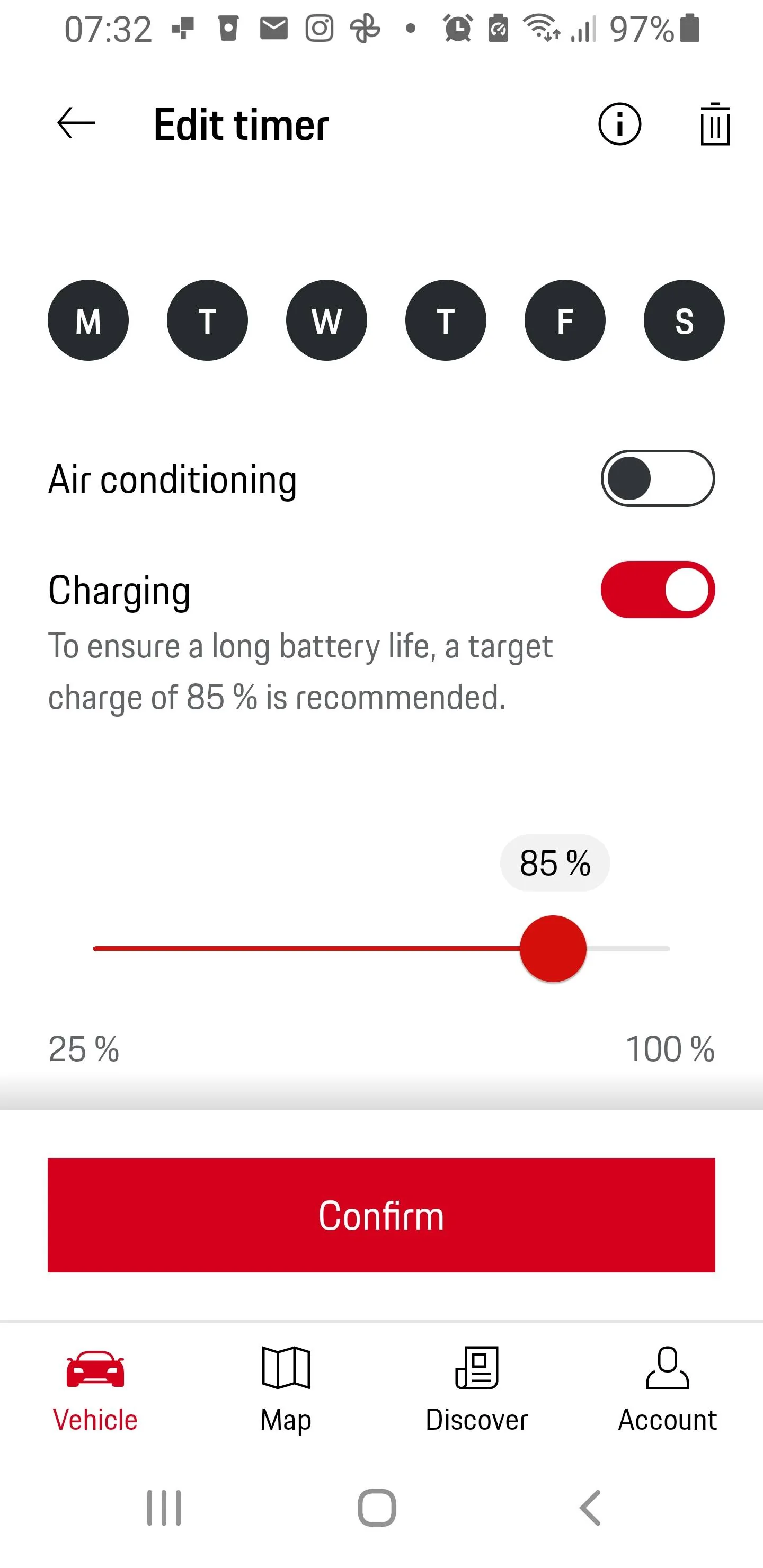
It is marked on the battery display via a line at the 85% position as well as on the My Porsche App in several places - charging overview screen and Timer config screen.

Porsche Taycan Charging patterns Screenshot_20221010-073211_My Porsch
Sponsored


Top