Sponsored

Questions from a Tesla Owner

TDinDC

Well-Known Member
Joined
Jun 25, 2022
Threads
21
Messages
1,066
Reaction score
1,277
Location
Washington, DC, USA
Vehicles
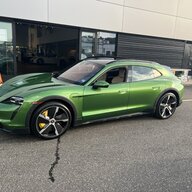
'22 Taycan 4S Cross Turismo, '06 Club Coupe (#48)
Country flag
There are a lot of Tesla haters out there. I didn't hate my Tesla Model X. When I had three kids in the house, it served its purpose extremely well.

That said, I obviously prefer my Taycan CT, although to be fair, the Taycan CT is only an option because all three of my kids are in University.

In any event, I just finished a road trip this weekend and wanted to point out three main differences between the Tesla Model X and the Taycan CT that make it so very much more enjoyable to drive the Taycan CT.

1. The predicted range of the Taycan CT is MUCH more accurate. I find that the Taycan's prediction of range is nearly spot on if not a little on the conservative side. By contrast, the Tesla Model X would always show a big range before the trip started, and then the range would tank as soon as you started driving (and be relatively volatile based on changes in driving or atmospheric conditions), which made trip planning much harder and driving sometimes very stressful as you see range continuing to drop from the predicted range. I now know that I can really count on the Taycan's predicted range (which is very comforting), and that it will not change too much during the trip.

2. Neither speed nor atmospheric conditions (e.g. rain) seem to impact the Taycan CT the way they impacted the Tesla Model X. In the Tesla Model X, you could see consumption exponentially increase (and therefore range exponentially decrease) if you drove at 70 mph or above. The Tesla rewarded you for driving between 45 and 65 mph, and punished you for anything faster. Same thing with rain: when it rained, the range on the Tesla Model X tanked. With the Tesla Model X, I found my self searching out Semis that were driving at 5 mph above the speed limit, and then just tucking myself in behind them with autopilot. By contrast, in the Taycan CT, I can seemingly drive as fast as I want (e.g., triple digit mph) with no material impact on range, and rain doesn't seem to matter either. This of course also removes a lot of stress from driving and makes driving much more enjoyable. (I would be interested in seeing comparisons of the aerodynamics of both). In the Taycan CT, I drive how I want and I have never needed to think about intentionally following a truck or large SUV merely to preserve range, which was ALWAYS on my mind in the Tesla Model X.

3. The real game changer, though, is charging speed. Before actually using the Taycan, I didn't really appreciate how important the faster charging rate really is, and how it is, arguably, more important than range. The Taycan charges so very fast that it really isn't a "thing." When I stop to charge, I have never needed to wait to charge more when I was finished with whatever else I wanted to do while stopped (e.g., eating, restroom, shopping). Amazing. It starts to move charging to the back of your mind.
Sponsored

 
Last edited:

whitex

Well-Known Member
Joined
Jul 30, 2021
Threads
87
Messages
8,195
Reaction score
7,236
Location
WA, USA
Vehicles
2023 Taycan TCT, 2024 Q8 eTron P+
Country flag
1. The predicted range of the Taycan CT is MUCH more accurate. I find that the Taycan's prediction of range is nearly spot on if not a little on the conservative side. By contrast, the Tesla Model X would always show a big range before the trip started, and then the range would tank as soon as you started driving (and be relatively volatile based on changes in driving or atmospheric conditions), which made trip planning much harder and driving sometimes very stressful as you see range continuing to drop from the predicted range. I now know that I can really count on the Taycan's predicted range (which is very comforting), and that it will not change too much during the trip.
Just a word of warning, Taycan CT estimates can be quite a bit off if you are traveling across a very different weather. When I drove across the country, the worst I experienced was over 20% less at destination than predicted, driving across the USA in the middle of February, so in real winter weather, but starting in Georgia, so warm and toasty. After a while, Taycan retrained itself and got more accurate again, but mentioning here for anyone who is driving across varying climates. Also, a small gripe, Taycan PCM wouldn't show me predicted destination SoC under 10%, it would just add a stop at the same charger (so maybe 6 feet earlier).

Drove Model S'es for a decade. Never used predicted range, except for destination SoC percentage, which is also how I travel with the Taycan - drive normally until the destination percentage drops under some threshold (depending on weather and my ability to find alternate chargers), then slow down or divert to another charger.
 
Last edited:

hhf2

Active Member
First Name
Heiko
Joined
Jan 11, 2022
Threads
0
Messages
35
Reaction score
30
Location
Berlin Germany
Vehicles
2022 Taycan RWD PB
Country flag
totally agree.

I see no rhyme or reason to the fluctuations in my Teslas ranges. AC on/off…weather…sometimes the old Models S 85 will go 320 kilometers with the kids in the car and the AC on, other times I am alone, same outside temperature, same speeds but I barely make it 250km. Same preconditioning and all… ?‍♂ It’s really only negligible because of the very dense Supercharger network.
That’s where it still falls down for me on my Taycan. Even the preferred charging networks oftentimes struggle to maximize the Taycan’s fast charge potential. And there are still too few Charge points with too few chargers. That’ll change though.

in general. Two impressive machines for different purposes with a slight Venn overlap on sporty capabilities.

was glad to read a post from another Taycan enthusiasts who doesn’t feel the need to bash another brand. Appreciated. ?

There are a lot of Tesla haters out there. I didn't hate my Tesla Model X. When I had three kids in the house, it served its purpose extremely well.

That said, I obviously prefer my Taycan CT, although to be fair, the Taycan CT is only an option because all three of my kids are in University.

In any event, I just finished a road trip this weekend and wanted to point out three main differences between the Tesla Model X and the Taycan CT that make it so very much more enjoyable to drive the Taycan CT.

1. The predicted range of the Taycan CT is MUCH more accurate. I find that the Taycan's prediction of range is nearly spot on if not a little on the conservative side. By contrast, the Tesla Model X would always show a big range before the trip started, and then the range would tank as soon as you started driving (and be relatively volatile based on changes in driving or atmospheric conditions), which made trip planning much harder and driving sometimes very stressful as you see range continuing to drop from the predicted range. I now know that I can really count on the Taycan's predicted range (which is very comforting), and that it will not change too much during the trip.

2. Neither speed nor atmospheric conditions (e.g. rain) seem to impact the Taycan CT the way they impacted the Tesla Model X. In the Tesla Model X, you could see consumption exponentially increase (and therefore range exponentially decrease) if you drove at 70 mph or above. The Tesla rewarded you for driving between 45 and 65 mph, and punished you for anything faster. Same thing with rain: when it rained, the range on the Tesla Model X tanked. With the Tesla Model X, I found my self searching out Semis that were driving at 5 mph above the speed limit, and then just tucking myself in behind them with autopilot. By contrast, in the Taycan CT, I can seemingly drive as fast as I want (e.g., triple digit mph) with no material impact on range, and rain doesn't seem to matter either. This of course also removes a lot of stress from driving and makes driving much more enjoyable. (I would be interested in seeing comparisons of the aerodynamics of both). In the Taycan CT, I drive how I want and I have never needed to think about intentionally following a truck or large SUV merely to preserve range, which was ALWAYS on my mind in the Tesla Model X.

3. The real game changer, though, is charging speed. Before actually using the Taycan, I didn't really appreciate how important the faster charging rate really is, and how it is, arguably, more important than range. The Taycan charges so very fast that it really isn't a "thing." When I stop to charge, I have never needed to wait to charge more when I was finished with whatever else I wanted to do while stopped (e.g., eating, restroom, shopping). Amazing. It starts to move charging to the back of your mind.
 

Zcd1

Well-Known Member
Joined
Aug 29, 2021
Threads
3
Messages
429
Reaction score
344
Location
Walloon Lake Michigan
Vehicles
Tesla Plaid, Genesis GV60 Perf, Audi Q5 TDi
Country flag
To be fair, Tesla’s latest software updates and battery management give their current cars far more accurate range predictions and faster charging speed than what was the case even two years ago.

The refreshed (late 2021+) Model S and X charge almost as quickly as the Taycan.
 

daveo4EV

Well-Known Member
First Name
David
Joined
Jan 28, 2019
Threads
192
Messages
7,003
Reaction score
10,473
Location
Santa Cruz
Vehicles
Cayenne Hybrid, 911(s) GT3/Convertable
Country flag
There are a lot of Tesla haters out there. I didn't hate my Tesla Model X. When I had three kids in the house, it served its purpose extremely well.

That said, I obviously prefer my Taycan CT, although to be fair, the Taycan CT is only an option because all three of my kids are in University.

In any event, I just finished a road trip this weekend and wanted to point out three main differences between the Tesla Model X and the Taycan CT that make it so very much more enjoyable to drive the Taycan CT.

1. The predicted range of the Taycan CT is MUCH more accurate. I find that the Taycan's prediction of range is nearly spot on if not a little on the conservative side. By contrast, the Tesla Model X would always show a big range before the trip started, and then the range would tank as soon as you started driving (and be relatively volatile based on changes in driving or atmospheric conditions), which made trip planning much harder and driving sometimes very stressful as you see range continuing to drop from the predicted range. I now know that I can really count on the Taycan's predicted range (which is very comforting), and that it will not change too much during the trip.

2. Neither speed nor atmospheric conditions (e.g. rain) seem to impact the Taycan CT the way they impacted the Tesla Model X. In the Tesla Model X, you could see consumption exponentially increase (and therefore range exponentially decrease) if you drove at 70 mph or above. The Tesla rewarded you for driving between 45 and 65 mph, and punished you for anything faster. Same thing with rain: when it rained, the range on the Tesla Model X tanked. With the Tesla Model X, I found my self searching out Semis that were driving at 5 mph above the speed limit, and then just tucking myself in behind them with autopilot. By contrast, in the Taycan CT, I can seemingly drive as fast as I want (e.g., triple digit mph) with no material impact on range, and rain doesn't seem to matter either. This of course also removes a lot of stress from driving and makes driving much more enjoyable. (I would be interested in seeing comparisons of the aerodynamics of both). In the Taycan CT, I drive how I want and I have never needed to think about intentionally following a truck or large SUV merely to preserve range, which was ALWAYS on my mind in the Tesla Model X.

3. The real game changer, though, is charging speed. Before actually using the Taycan, I didn't really appreciate how important the faster charging rate really is, and how it is, arguably, more important than range. The Taycan charges so very fast that it really isn't a "thing." When I stop to charge, I have never needed to wait to charge more when I was finished with whatever else I wanted to do while stopped (e.g., eating, restroom, shopping). Amazing. It starts to move charging to the back of your mind.
range prediction's in both vehicle's can/do often suck and are wildly inaccurate - because just like in a gas car it's based on past driving conditions and not future…

my 911 GT3 after a day on track estimates I can drive it 75 miles total on a full tank of gas (vs. a more reasonable 350 miles) - this is because i've been driving it at full throttle all day and based on past consumption history the vehilce estimates 23.7 gallons of gasoline will only take me 75 miles - this is ridiculous and demonstrates the stupidity of these "metrics"

on my Tesla's I simply disabled the "miles of range" display and used "power" display instead which simply shows battery % in lieu of miles of range - that metric is accurate/useful and frankly not misleading…

however since owning Tesla's since 2012 and Taycan since 2020 I find the vehicle navigation estimate as to battery % @ destination to be a highly accurate/useful planning tool (and in the Case of Tesla often is in conflict with remaining range on the dash - LOL)

ignore the remaining range "fuel gauge" estimates in _ALL_ vehicles - it's stupid metric based on recent history and is not and can not be "forward" looking because it can't predict the future

I instead rely on navigation based estimates which incorporate both road elevation and speed limit data to develop a reasonably accurate estimate as to how much battery you'll have at any given destination if things "go to plan".

both vehicles in my experience suffer range loss associated with speed - neither vehicle can "cheat" physics and the Taycan will go further if driven slower - it's a matter of physics - it has to be true and is true. Now it may have sufficient range to go far enough when driven faster, but it's an undeniable fact/consequence that it can go further at 60 mph than it can at 70 mph. There is no "magic" where Taycan avoids the geometric cost increase of V^2 (velocity squared) increase in drag for aero-dynamic loads.

YMMV :CWL:


TDinDC

Well-Known Member
Joined
Jun 25, 2022
Threads
21
Messages
1,066
Reaction score
1,277
Location
Washington, DC, USA
Vehicles
'22 Taycan 4S Cross Turismo, '06 Club Coupe (#48)
Country flag
range prediction's in both vehicle's can/do often suck and are wildly inaccurate - because just like in a gas car it's based on past driving conditions and not future…

my 911 GT3 after a day on track estimates I can drive it 75 miles total on a full tank of gas (vs. a more reasonable 350 miles) - this is because i've been driving it at full throttle all day and based on past consumption history the vehilce estimates 23.7 gallons of gasoline will only take me 75 miles - this is ridiculous and demonstrates the stupidity of these "metrics"

on my Tesla's I simply disabled the "miles of range" display and used "power" display instead which simply shows battery % in lieu of miles of range - that metric is accurate/useful and frankly not misleading…

however since owning Tesla's since 2012 and Taycan since 2020 I find the vehicle navigation estimate as to battery % @ destination to be a highly accurate/useful planning tool (and in the Case of Tesla often is in conflict with remaining range on the dash - LOL)

ignore the remaining range "fuel gauge" estimates in _ALL_ vehicles - it's stupid metric based on recent history and is not and can not be "forward" looking because it can't predict the future

I instead rely on navigation based estimates which incorporate both road elevation and speed limit data to develop a reasonably accurate estimate as to how much battery you'll have at any given destination if things "go to plan".

both vehicles in my experience suffer range loss associated with speed - neither vehicle can "cheat" physics and the Taycan will go further if driven slower - it's a matter of physics - it has to be true and is true. Now it may have sufficient range to go far enough when driven faster, but it's an undeniable fact/consequence that it can go further at 60 mph than it can at 70 mph. There is no "magic" where Taycan avoids the geometric cost increase of V^2 (velocity squared) increase in drag for aero-dynamic loads.

YMMV :CWL:
I’m talking only about boring road trips on US interstate highways, not dramatically divergent use cases like road usage and track usage or F1. ? That issue is a very specific, and I would say very unusual for Taycan, use case that causes a very predictable and understandable issue. My 911 can range from 9 mph to 29 mph, so any range predicted based on one driving style versus the other would be similarly useless.

If you are only driving on the roads in a relatively consistent fashion, this simply should not be a huge issue. In fact, if you usually just drive around town where you don’t pay attention to range and then take a road trip, the minor bias towards conservatism corrects itself pretty quickly and is actually fairly good.
Yes of course physics are physics. Yes agreed that speed and weather can impact range predictions, and in more extreme cases, materially so.

My point was that in my Taycan CT, the consumption analytics are more accurate and stable than in the former Tesla Model Xs, not that they are perfect. It wouldn’t surprise me if my perception is impacted by moving from a Model X (as opposed to an S or something else) to Taycan, but I owned Tesla Model Xs for 8 years as well, so this wasn’t a passing experience.

My other point was that the range on Taycan seemed to be much less impacted by speed than a Tesla Model X, not that speed was irrelevant. This should not be too surprising given the profile of the Model X vs the Taycan, right?

Predicted range may not be perfect but it is easy and familiar. It causes me no issues. YMMV
 
Last edited:

WasserGKuehlt

Well-Known Member
Joined
Sep 7, 2022
Threads
5
Messages
2,066
Reaction score
2,456
Location
WA
Vehicles
4CT, 996C2, MacanS
Country flag
3. The real game changer, though, is charging speed. Before actually using the Taycan, I didn't really appreciate how important the faster charging rate really is, and how it is, arguably, more important than range. The Taycan charges so very fast that it really isn't a "thing."
I'll just say that "charging speed" is, in reality, directly related to the efficiency of the car - that is, how many miles of range you're adding per unit of time. Based on my observations, the Taycan charges (electric power consumed) faster or as fast as any other car I ever encountered during a fast charging session - and it didn't seem to matter whether I was using a 150k or 350k station. However, with Teslas firmly in the 3.+ mi/kWh compared to mid-2s for me, their rate of adding range is pretty fast - if not faster - than the Taycan's.

Lest this sounds like disagreement: it's not, just pedantically pointing out the true charging speed is "miles per hour". It's misleading as a metric (or, rather, it's subjective) but Tesla have been using it forever since it's intuitive and relatable.
 

TDinDC

Well-Known Member
Joined
Jun 25, 2022
Threads
21
Messages
1,066
Reaction score
1,277
Location
Washington, DC, USA
Vehicles
'22 Taycan 4S Cross Turismo, '06 Club Coupe (#48)
Country flag
I'll just say that "charging speed" is, in reality, directly related to the efficiency of the car - that is, how many miles of range you're adding per unit of time. Based on my observations, the Taycan charges (electric power consumed) faster or as fast as any other car I ever encountered during a fast charging session - and it didn't seem to matter whether I was using a 150k or 350k station. However, with Teslas firmly in the 3.+ mi/kWh compared to mid-2s for me, their rate of adding range is pretty fast - if not faster - than the Taycan's.

Lest this sounds like disagreement: it's not, just pedantically pointing out the true charging speed is "miles per hour". It's misleading as a metric (or, rather, it's subjective) but Tesla have been using it forever since it's intuitive and relatable.
Sure. I just mean that on the same trips, what took me 30-45 minutes to charge in the Tesla Model X now takes me 10-20 minutes in the Taycan (at high speed charging stations of course). For me personally, this is a game changer as I do not perceive that I have lost any time with the Taycan as it is charged by the time I return to the car from restroom unlike waiting for an additional 15-20 minutes after returning to the Tesla


Zcd1

Well-Known Member
Joined
Aug 29, 2021
Threads
3
Messages
429
Reaction score
344
Location
Walloon Lake Michigan
Vehicles
Tesla Plaid, Genesis GV60 Perf, Audi Q5 TDi
Country flag
Sure. I just mean that on the same trips, what took me 30-45 minutes to charge in the Tesla Model X now takes me 10-20 minutes in the Taycan (at high speed charging stations of course). For me personally, this is a game changer as I do not perceive that I have lost any time with the Taycan as it is charged by the time I return to the car from restroom unlike waiting for an additional 15-20 minutes after returning to the Tesla
This is a resource worth exploring, if you haven't seen it:


TL;DR:
Charging speeds:
Taycan 4S: 10.45 miles per minute.
Refreshed Tesla Model S: 9.74 miles per minute.
Taycan 4 Cross Turismo: 8.43 miles per minute
 
Last edited:

TDinDC

Well-Known Member
Joined
Jun 25, 2022
Threads
21
Messages
1,066
Reaction score
1,277
Location
Washington, DC, USA
Vehicles
'22 Taycan 4S Cross Turismo, '06 Club Coupe (#48)
Country flag
This is a resource worth exploring, if you haven't seen it:


TL;DR:
Charging speeds:
Taycan 4S charges: 10.45 miles per minute.
Refreshed Tesla Model S: 9.74 miles per minute.
Taycan 4 Cross Turismo: 8.43 miles per minute.
Thanks. 10 miles vs 3-4 miles for Model X would explain it!
 

WasserGKuehlt

Well-Known Member
Joined
Sep 7, 2022
Threads
5
Messages
2,066
Reaction score
2,456
Location
WA
Vehicles
4CT, 996C2, MacanS
Country flag
This is a resource worth exploring, if you haven't seen it:

TL;DR:
Charging speeds:
Taycan 4S: 10.45 miles per minute.
Refreshed Tesla Model S: 9.74 miles per minute.
Taycan 4 Cross Turismo: 8.43 miles per minute
That's an impressive data set, but I can't quite understand why the 4S would charge so much faster than the 4CT with otherwise identical 'hardware'? (And wtf is a Taycan Plus?)

Thanks for sharing - definitely worth spending some time over it.
 

Zcd1

Well-Known Member
Joined
Aug 29, 2021
Threads
3
Messages
429
Reaction score
344
Location
Walloon Lake Michigan
Vehicles
Tesla Plaid, Genesis GV60 Perf, Audi Q5 TDi
Country flag
That's an impressive data set, but I can't quite understand why the 4S would charge so much faster than the 4CT with otherwise identical 'hardware'? (And wtf is a Taycan Plus?)

Thanks for sharing - definitely worth spending some time over it.
Miles of range added per minute of charging depends not only on actual charging current, but also on the vehicle's efficiency.

Cross Turismo is less efficient than the 4S, so its effective charging speed is lower...

Refreshed Tesla Model S LR: 4.09 miles/kWH
Taycan 4S: 3.2 miles/kWH
Cross Turismo: 2.6 miles/kWH

(that's the reason that the Model S' effective charging speed is so close to the Taycan's, despite The Tesla's "inferior" 400V architecture)


Last edited:

WasserGKuehlt

Well-Known Member
Joined
Sep 7, 2022
Threads
5
Messages
2,066
Reaction score
2,456
Location
WA
Vehicles
4CT, 996C2, MacanS
Country flag
Miles of range added per minute of charging depends not only on actual charging current, but also on the vehicle's efficiency.

Cross Turismo is less efficient than the 4S, so its effective charging speed is lower...
I understand the former, not sure I agree with the latter. In the spreadsheet, both the 4s and the 4CT are listed with a 215mi WLTP range. So given the same battery, in theory the efficiency is equal as well.

Taycan 4S: 3.2 miles/kWH
Cross Turismo: 2.6 miles/kWH
The CT mileage is spot-on - mine is an identical 2.6 after ~7k miles. However, all of those miles were in the colder, winter months. Lately I'm trending up to 2.9-3; I really doubt the additional few kilos/pounds of the wagon cost it a whopping 20% of range/efficiency vs the 4s - so again, the data, however impressively presented, appears to be off.

(edit) Ah, spotted the discrepancy:
Porsche Taycan 4 cross tourismo 215 2245 389 262
Porsche Taycan 4S 93 kWh 215 2295 462 265

The first column is WLTP consumption, the 3rd column is range. That means where this spreadsheet was authored the 4CT is sold with the smaller battery; in the US the 4CT is equipped with the 93kWh one.
 

Zcd1

Well-Known Member
Joined
Aug 29, 2021
Threads
3
Messages
429
Reaction score
344
Location
Walloon Lake Michigan
Vehicles
Tesla Plaid, Genesis GV60 Perf, Audi Q5 TDi
Country flag
I understand the former, not sure I agree with the latter. In the spreadsheet, both the 4s and the 4CT are listed with a 215mi WLTP range. So given the same battery, in theory the efficiency is equal as well.


The CT mileage is spot-on - mine is an identical 2.6 after ~7k miles. However, all of those miles were in the colder, winter months. Lately I'm trending up to 2.9-3; I really doubt the additional few kilos/pounds of the wagon cost it a whopping 20% of range/efficiency vs the 4s - so again, the data, however impressively presented, appears to be off.

(edit) Ah, spotted the discrepancy:
Porsche Taycan 4 cross tourismo 215 2245 389 262
Porsche Taycan 4S 93 kWh 215 2295 462 265

The first column is WLTP consumption, the 3rd column is range. That means where this spreadsheet was authored the 4CT is sold with the smaller battery; in the US the 4CT is equipped with the 93kWh one.
I figured the CT's extra aero drag accounted for most of the difference...not the weight.

The information in the spreadsheet is accurate for the range tests incorporated in the results. Some vehicles have multiple range tests included, some only a few. The more tests, the more accurate the results seem to be...
Sponsored


Top